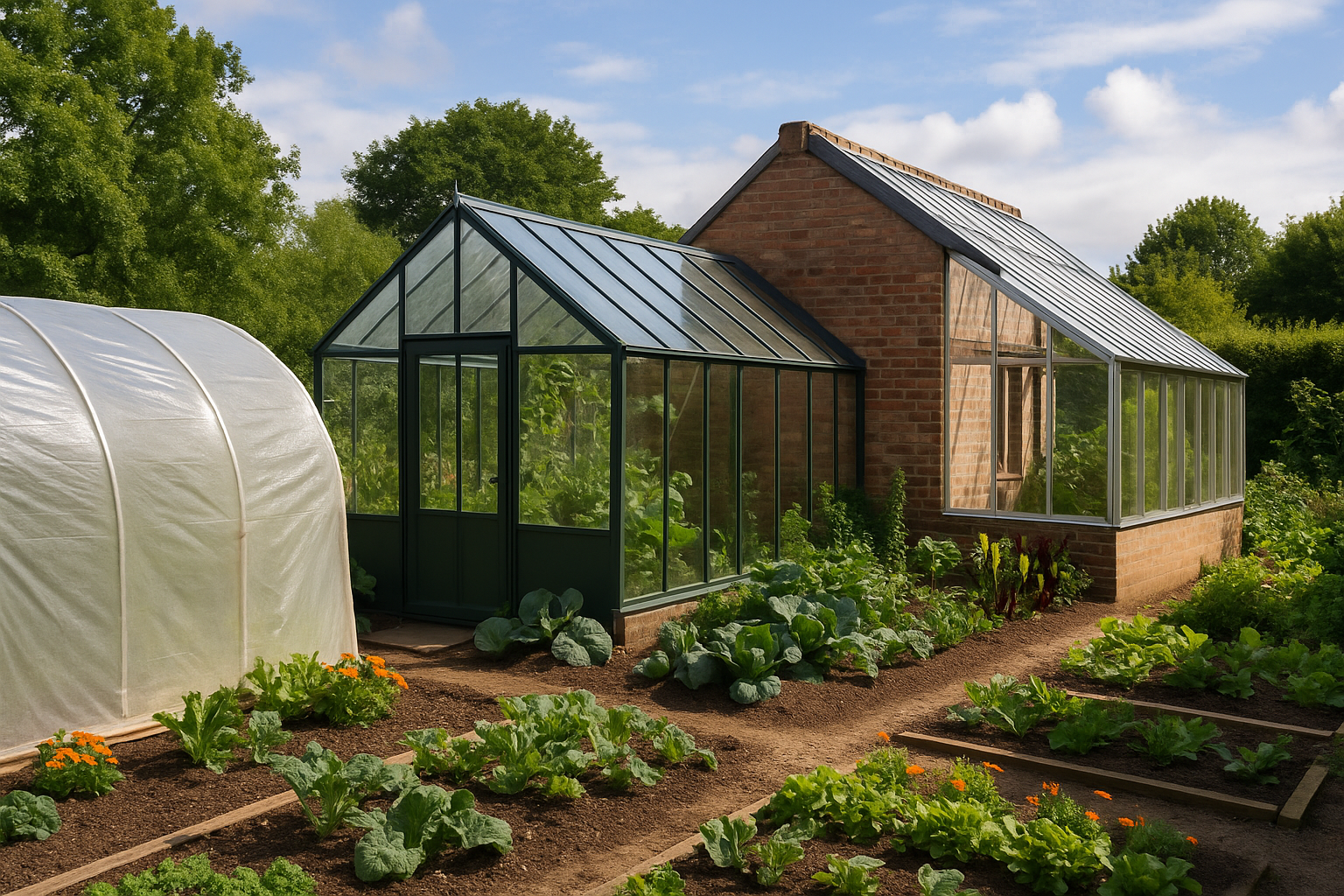
What type of greenhouse should you choose? Tunnel, lean-to, glass, or polycarbonate?
Setting up a greenhouse is a bit like buying a car: there are basic models, luxury editions, and clever compromises in between. But while your car takes you to work, your greenhouse takes your tomatoes and lettuces… toward a brighter future (and spares you from paying supermarket prices for bland veggies).
The catch? You still need to pick the right one! Tunnel, lean-to, glass, or polycarbonate—the options are enough to make your head spin (and sometimes drain your wallet). Don’t panic: here’s a clear, down-to-earth comparison—sprinkled with a bit of humor—to help you find the greenhouse that fits both your garden and your gardening ambitions.
Why It’s Worth Choosing Carefully
The role of a greenhouse in your garden
A greenhouse isn’t just a rain shelter. It’s a microclimate you build in your backyard. Your seedlings get a cozy nursery, your tender crops thrive, and you enjoy longer harvests.
In other words, a greenhouse is your plants’ home sweet home. Warm when it’s cold outside, dry when it’s pouring, and—bonus—sometimes a handy barrier against those nosy seed-thieving birds.
Comfort matters for the gardener too
Never underestimate your own comfort. With a greenhouse, you can garden even when the weather’s grim. No more trudging out in a parka and soggy boots just to start your seedlings. Step inside, and you’re dry, sheltered… and almost warm (let’s not exaggerate, but it makes a difference).
In short: the greenhouse you choose shapes your day-to-day gardening life.
The Main Types of Greenhouses Explained
The tunnel greenhouse: simplicity first
The tunnel greenhouse is the no-fuss, budget-friendly option. Metal hoops, a plastic cover, and voilà—a spacious shelter for your crops.
Pros
- Affordable: entry-level tunnels start at just a few hundred euros. Large ones remain reasonably priced.
- Spacious: great for generous rows and “XXL vegetable patch” vibes.
- Easy setup: no engineering degree required—just some elbow grease.
Cons
- Short lifespan: plastic sheeting wears out and eventually needs replacing.
- Weather resistance: strong winds may send it flying into the neighbor’s yard.
- Poor insulation: often an oven in summer and a freezer in winter.
Verdict: the tunnel is like a budget city car—great for beginners, inexpensive and practical, but it quickly shows its limits if you demand too much.
The lean-to greenhouse: compact and clever
As the name suggests, a lean-to attaches to a wall—house, garage, or shed. Think of it as a plant conservatory.
Pros
- Space-saving: perfect for small gardens.
- Passive heating: the wall absorbs heat by day, releasing it at night.
- Convenient: always close at hand, usually near the house.
Cons
- Orientation is critical: against a north-facing wall, your plants will sulk.
- Limited space: great for seedlings, less so for a full family veggie patch.
- Price range: some are affordable, but stylish glass models can be costly.
Verdict: the lean-to is like a Mini Cooper—compact, stylish, and practical, but not built for long-haul adventures.
The glass greenhouse: the classic beauty
Glass greenhouses are the Versailles of gardening. Elegant, bright, and long-lasting… but not for every budget.
Pros
- Maximum light: glass provides excellent transparency for happy plants.
- Durability: with care, a glasshouse can last for decades.
- Aesthetic appeal: let’s face it, glass greenhouses are gorgeous.
Cons
- Expensive: structure, foundations, and tempered glass add up quickly.
- Fragile: heavy branches or hail can shatter panes.
- Heavy to install: this is not a portable model.
Verdict: the glass greenhouse is the high-end luxury sedan—elegant, efficient, durable, but requiring both investment and upkeep.
The polycarbonate greenhouse: the smart compromise
Polycarbonate has become the darling of modern gardeners. Lightweight yet rigid, it strikes a balance between practicality and performance.
Pros
- Good insulation: multiwall panels hold heat better than single-pane glass.
- Impact-resistant: hail, branches, footballs—it takes them in stride.
- More affordable than glass: durable without breaking the bank.
Cons
- Lower light transmission: diffused light can slow some crops.
- Aging: panels may yellow or lose clarity over time.
- Limited in cold climates: may need backup heating in harsh winters.
Verdict: the polycarbonate greenhouse is the family SUV—versatile, sturdy, practical, but not flawless in every situation.
How to Choose the Right Greenhouse for You
Define your priorities
Ask yourself:
- Want to extend tomato season and shelter winter salads? → A tunnel will do.
- Looking for a neat, accessible greenhouse close to home? → Go for a lean-to.
- Dreaming of maximum light and long-term durability? → Glass is the winner.
- Need a balance of budget, strength, and insulation? → Polycarbonate is your ally.
Factor in your climate
- Windy regions → skip poorly anchored tunnels.
- Mountain climates → go with sturdy, well-insulated materials.
- Southern heat → prioritize shade and ventilation, or your tomatoes will roast on the vine.
Think long-term
A greenhouse isn’t a seasonal gadget. It’s an investment. Purchase price is just the start: add in upkeep, plastic replacement, cleaning, and maybe even heating if you want to grow exotic crops.
Conclusion
Choosing a greenhouse is like choosing a gardening partner. It should match your needs, your space, and your ambitions.
- Beginner on a budget? → The tunnel greenhouse: affordable and practical.
- Small garden, craving elegance? → The lean-to: compact and stylish.
- Passionate grower ready to invest? → The glasshouse: durable, bright, impressive.
- Pragmatic gardener? → Polycarbonate: versatile, reliable, cost-effective.
Whatever you choose, the right greenhouse will transform the way you garden. It will extend your seasons, diversify your crops, and give you that little grin of pride when you harvest tomatoes in October.
And isn’t that, after all, the gardener’s sweetest reward?