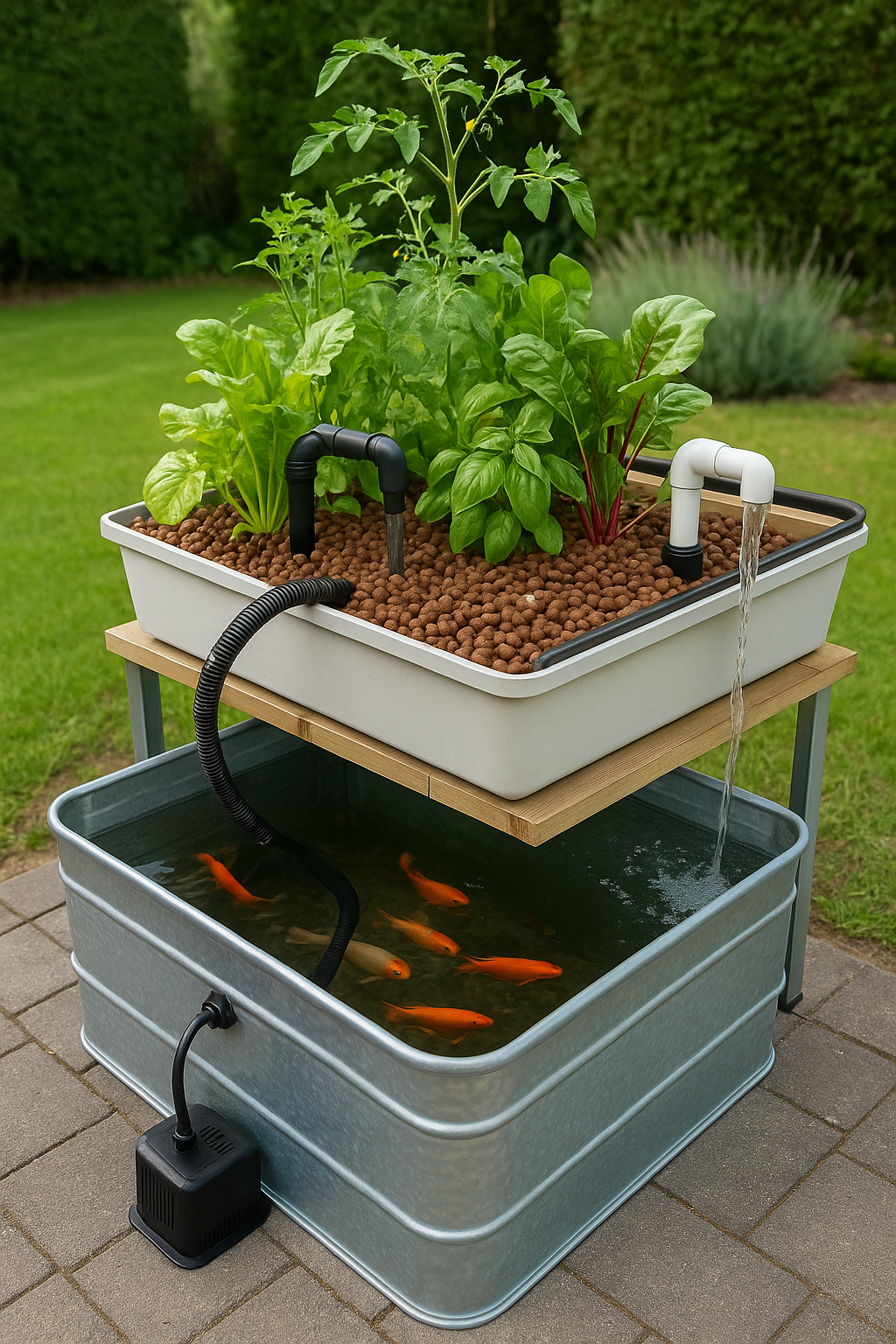
How to Build a Home Aquaponics System: Step-by-Step Guide
Imagine your fish as organic gardeners, turning their little droppings into five-star fertilizer for your lettuce. That’s aquaponics! This ingenious system combines fish farming with plant cultivation in a beautifully balanced win-win relationship.
The good news? You don’t need to be an agricultural engineer to get started. With some basic equipment, a few smart choices, and a bit of patience (yes, that part matters!), you can set up a productive mini-ecosystem at home. Follow this step-by-step guide—we promise it’s easier than assembling Ikea furniture.
Understanding the Basics Before You Build
The Fish–Bacteria–Plant Cycle
Think of aquaponics as a well-scripted series with three main characters:
- Fish: they eat, they live, and they produce waste (less glamorous, but essential).
- Bacteria: the invisible fairies that convert toxic waste into usable nutrients.
- Plants: the hungry ones, feeding on nitrates while cleaning the water.
The result? A virtuous cycle on repeat. Fish swim in clear water, plants grow like rockets, and you get the harvest.
Why Choose Home Aquaponics?
Because it’s:
- Eco-friendly: saves up to 90% more water than a traditional garden.
- Healthy: no need for pesticides or chemical fertilizers.
- Versatile: grow vegetables and raise fish, if you want to eat them.
- Fun and educational: a great way to teach kids (and adults) about natural cycles.
In short, it’s productive, sustainable, and deeply satisfying.
Preparing the Equipment
Fish Tank and Grow Bed
You’ll need two solid foundations:
- Fish tank: 200–500 liters is a good start. Fish like space, not overcrowding.
- Grow bed: filled with clay pebbles or washed gravel, where your plants will settle in.
Tip: place the grow bed above the fish tank. The water will flow back down by gravity—saving you a pump.
Pumps and Water Circulation
- Water pump: keeps the system circulating.
- Mechanical filter: foam or biofilter to catch larger waste.
- Air pump (bubbler): fish need oxygen just as much as you enjoy a breath of fresh air.
Substrate and Species Selection
- Substrate: expanded clay pebbles—light, neutral, perfect for roots.
- Fish: tilapia, carp, trout… or goldfish if you want an easy start.
- Plants: lettuce, basil, tomatoes, cucumbers, strawberries. Avoid heavy feeders like melons or squash at first.
Steps to Build Your Aquaponics System
Setting Up the Fish Tank
Choose a stable, sturdy spot. Fill the tank with water, install the pump and bubbler. If using tap water, let it sit for 24 hours—chlorine and fish are not friends.
Pro tip: avoid full sun exposure, or you’ll end up growing algae instead of lettuce.
Building the Grow Bed
Place the grow bed above the fish tank and fill it with thoroughly rinsed substrate (otherwise, hello dust storm).
Set up an inflow and outflow system:
- Inflow = water pumped from the fish tank,
- Outflow = gravity-fed return pipe.
For extra efficiency, add a bell siphon. It automatically cycles filling and draining, giving plants the perfect irrigation rhythm.
Connecting, Testing, and Starting the Nitrogen Cycle
Here comes the moment of truth:
- Turn on the pump, check the flow, and fix any leaks.
- Add a few hardy fish (goldfish are perfect for beginners).
- Wait: it takes 3 to 6 weeks for bacteria to establish and the nitrogen cycle to stabilize.
Once the balance is in place, you can add more fish and start planting.
Conclusion
Building a home aquaponics system isn’t rocket science. All you need is a fish tank, a grow bed, a pump—and most importantly… patience. Aquaponics is all about balance between fish, bacteria, and plants.
In return, you get a productive, eco-friendly, and sustainable mini-farm. Plus, it’s pretty cool to say: “See this salad? It grew thanks to my fish!” 🐟🌱
So—are you ready to turn your fish into gardeners?