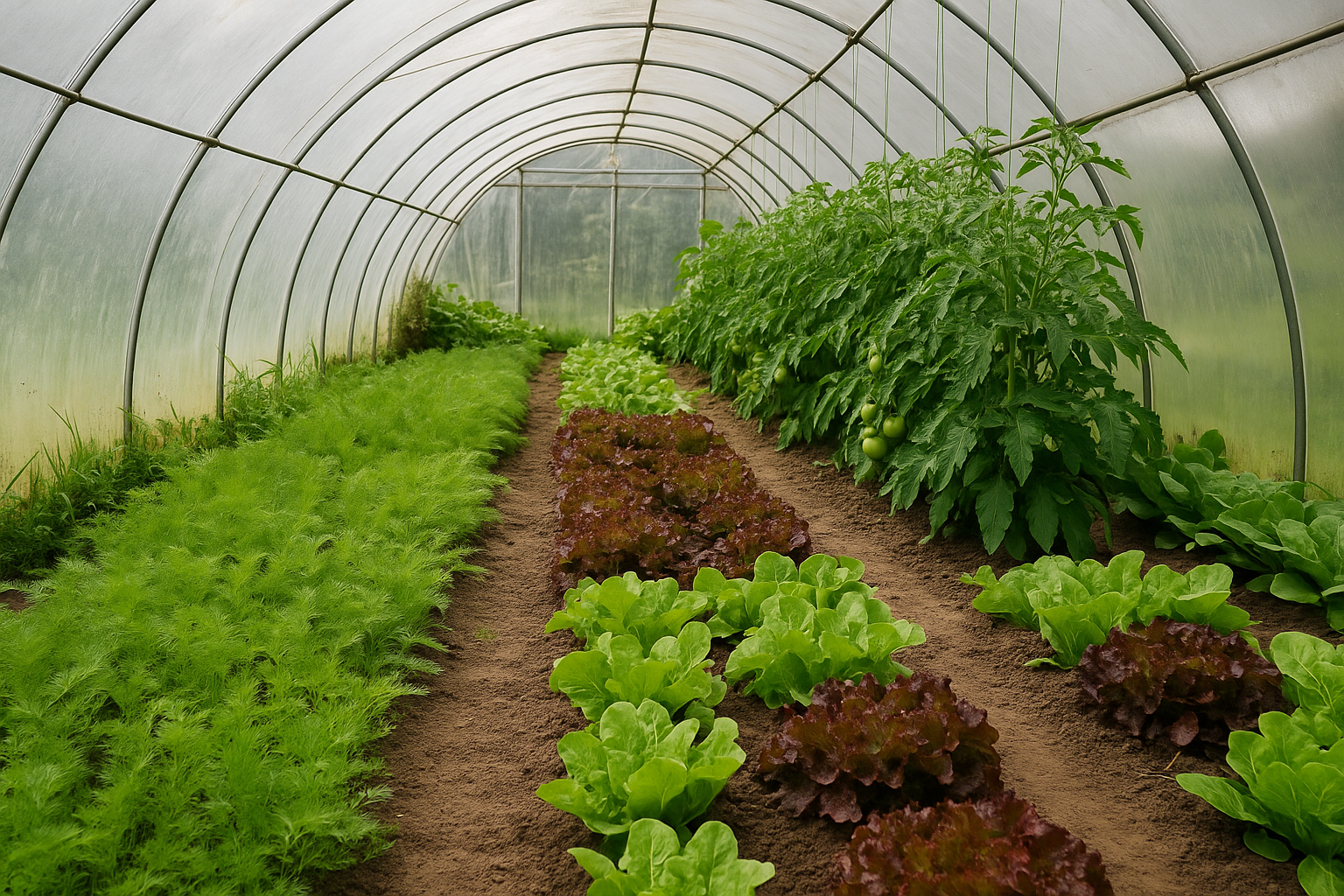
What to grow in a greenhouse throughout the seasons? A practical guide
Having a greenhouse is a bit like owning a magic wand in the garden: it lets you extend the season, protect tender crops, and even grow tomatoes while the weather outside screams onion soup. But between dream and reality, the big question comes quickly… what do you actually grow in it—and when?
Because no, a greenhouse isn’t just a “green catch-all” where you toss in seeds and seedlings hoping for a jungle. It has its rhythms, its rules, and yes, its quirks. But used wisely, it becomes an incredible ally for harvesting nearly year-round. So slip on your gloves and come along—we’re going to travel season by season and discover the best of what your greenhouse can offer.
Spring: the Seedling Boom
Ah, spring! Outside, it may still be frosting at night, but inside your greenhouse it already feels like a cozy nursery for eager seeds.
The early-start stars
Spring is the season for early sowings, and the greenhouse gives you a real head start.
- Tomatoes – undisputed queens of the greenhouse. Sow them as early as March, and they’ll be ready for transplanting outdoors (or staying put if they’re a bit delicate) by May.
- Peppers, chilies, and eggplants – a little fussy, but with a strong greenhouse start, they’ll reward you with generous summer harvests.
- Zucchini and cucumbers – early sowings under cover mean you’ll enjoy the first fruits well before your neighbors.
Herbs in VIP mode
Basil, in particular, thrives in the spring greenhouse—it’s basically its personal spa. Chives, cilantro, and mint also benefit from sheltering against those late frosts.
Flower companions
Why not add a splash of color? Nasturtiums and marigolds are perfect: they beautify, some are edible, and they attract helpful pollinators. A three-in-one: beauty, food, biodiversity.
In short, spring turns your greenhouse into a plant maternity ward—seedlings galore, tender plants pampered, and a garden already running ahead of the season.
Summer: Abundance, Heat… and Vigilance
In summer, your greenhouse transforms into a solar-powered kitchen. Yes, vegetables love it—but be careful not to bake them into a casserole too soon.
Summer superstars
- Tomatoes (again!) – under cover, they dodge blight from summer rains. Just watch out for excess humidity: ventilation is key.
- Cucumbers – prolific but thirsty; they need steady watering.
- Peppers and eggplants – soak up the heat like holidaymakers at the beach.
- Melons – if your greenhouse has good exposure, go for it! With a bit of patience, the fragrance of a homegrown melon is worth every effort.
The more delicate types
Some crops don’t love greenhouse heat waves:
- Lettuce and spinach – bolt quickly without plenty of shade and water.
- Radishes – best sown late in the season for crisp autumn harvests.
The summer secret: ventilate, water, and shade. Keep your greenhouse livable, or your veggies will end up “au gratin” before you can even pick them.
Autumn: Stretching the Harvest
Autumn is when the greenhouse truly shows its strength—extending the season and serving up produce while the outdoors starts to feel like cabbage soup.
Leafy greens and roots
- Spinach and Swiss chard – thrive in cool but sheltered conditions.
- Salad greens – lettuces, lamb’s lettuce, arugula—enough to keep plates fresh even when skies turn gray.
- Turnips and beets – sown early, they’ll be ready before winter or in early spring.
The endurance champs
- Cabbages – Brussels sprouts, curly kale, cauliflower… the marathon runners of the vegetable patch.
- Leeks – steady performers under cover, ready whenever you need them.
Autumn feels like the year’s “second chance”: while outdoor harvests fade, your greenhouse keeps giving as if nothing had changed.
Winter: Patience and Protection
No, your greenhouse won’t turn into a tropical paradise in January (unless you’ve invested in serious heating). But it’s still a precious ally.
Winter crops under cover
- Winter lettuces and lamb’s lettuce – fresh greens for cold months.
- Spinach – hardy and adaptable to chilly weather.
- Radishes and arugula – quick crops that add a splash of green even in the depths of winter.
Early sowings
By February, you can already sow peas, broad beans, and the first radishes. They’ll bide their time under cover and leap into growth as the days lengthen.
In winter, the greenhouse isn’t a tropical supermarket—but it guarantees freshness and quietly sets the stage for spring.
Extra Tips for Year-Round Growing
Even greenhouses need a little backup:
- Mulching – keeps soil warm and reduces watering.
- Fleece covers – protect young plants from surprise cold snaps.
- Crop rotation – yes, even under cover; don’t plant the same veggies in the same spot year after year.
- Regular cleaning – clean panes = more light = happier plants.
Conclusion
Greenhouse gardening through the seasons is a bit like juggling four calendars at once. Spring brings the excitement of seedlings, summer the bounty (and sweat), autumn the hidden bonus, and winter the patience and quiet protection.
With a little organization, some vigilance, and a pinch of humor (because yes, sometimes your zucchini will sulk and your tomatoes will pout), you can harvest almost year-round.
So—ready to turn your greenhouse into a four-season restaurant for demanding veggies? Your taste buds (and your envious neighbors) will thank you.