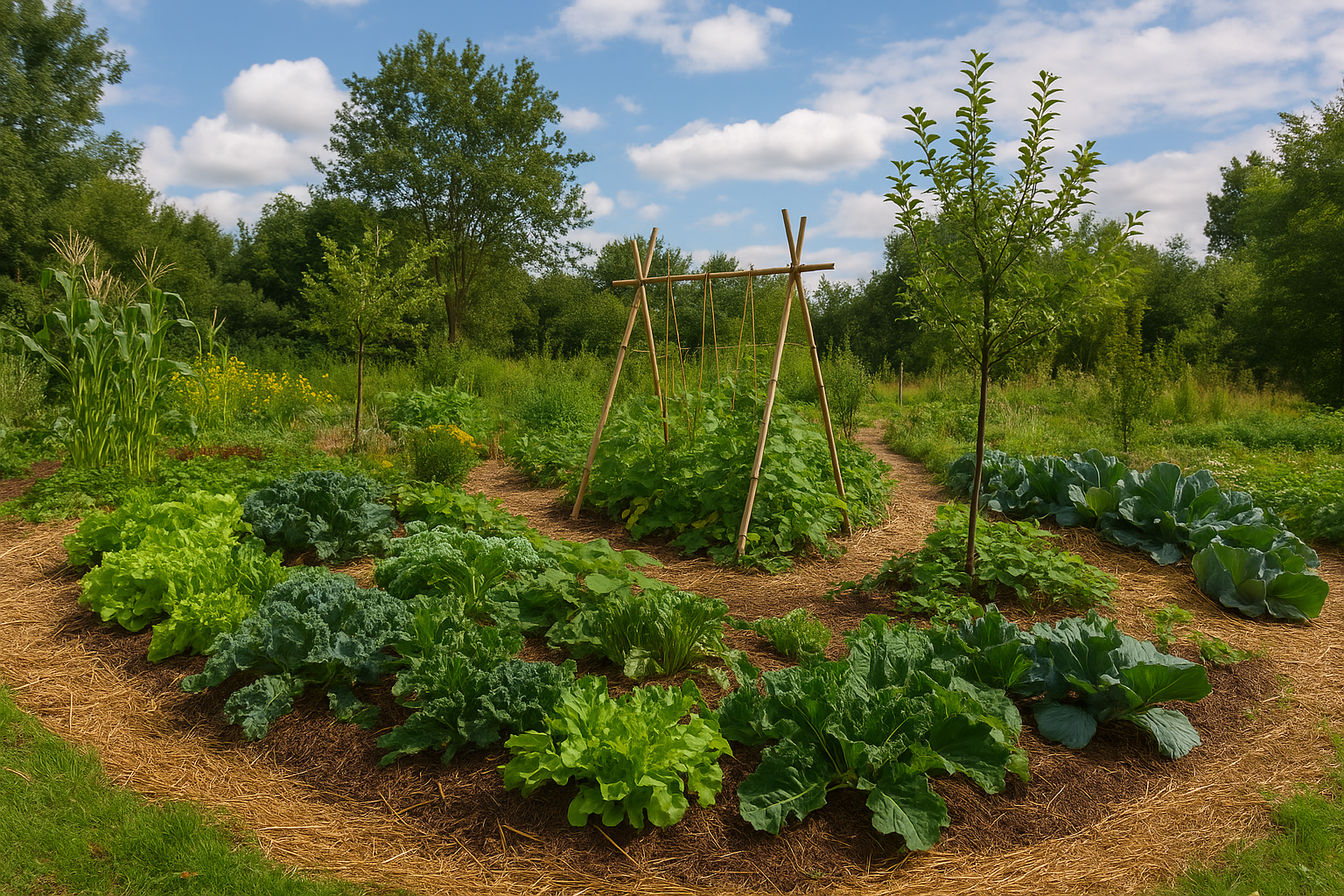
Permaculture vegetable garden: essential principles and practical application
Permaculture vegetable garden: essential principles and practical application
Picture this: a vegetable garden that almost takes care of itself, where even slugs have their place (well, not too many), where scraps turn into treasures, and where every plant seems to have signed a peace treaty. Sounds utopian? Not really—that’s the promise of permaculture.
Behind a word that sounds like the latest artsy movement lies something very practical. Permaculture is a way of designing your garden—and more broadly, your lifestyle—by taking cues from nature. No frantic planting sprees, no dashes to buy “miracle fertilizers” at the first sign of trouble. Instead, you take your time, observe, think, and build an ecosystem that works with nature, not against it.
So, slip on your boots, grab your gloves (or not—purists prefer bare hands in the soil), and let’s step into the fascinating world of the permaculture garden.
Understanding the Philosophy of Permaculture
More than just gardening
If you think permaculture is just “organic gardening with a bit of mulch,” think again. It’s a complete system—a philosophy of life that applies not only to gardening, but also to urban design, energy, even human relationships. But let’s stay in the garden for now—it’s the perfect training ground.
The idea is simple: observe nature and learn from it. After all, forests have been thriving for millennia without tractors or bags of fertilizer.
The three pillars: a simple but powerful ethic
Permaculture is built on three guiding principles:
- Care for the Earth: protect the soil, water, forests—in short, stop treating the planet like a disposable toy.
- Care for people: share resources fairly, create welcoming places to live. A garden isn’t just about food—it’s about connection.
- Redistribute the surplus: if your zucchini are taking over the kitchen, don’t dump them on your neighbor’s doorstep (though that works too)—share them. Abundance grows when it circulates.
Key Principles Applied to the Garden
Observe before you dig
Before reaching for tools, grab a notebook and… watch. Where does the sun rise? Where does the wind blow hardest? Which spots stay damp after rain? Observation is 80% of the work. The rest is just implementation.
Trust me—this step saves you endless watering chores or fried tomato plants under blazing sun.
Cooperation, not competition
Traditional gardens often separate crops into neat little rows: tomatoes here, carrots there. Permaculture flips that script in favor of joyful mixing. Carrots alongside onions (mutual pest protection). Tomatoes and basil as garden buddies (as good together in the soil as in a salad).
The idea is simple: plants help each other, directly or indirectly. The result? Fewer diseases, bigger harvests, healthier soil.
Recycling and making the most of resources
In permaculture, nothing goes to waste. Kitchen scraps become compost, grass clippings turn into mulch, rainwater gets stored and reused. You recycle, you save money, and your plants thrive.
Today’s waste is tomorrow’s resource—like turning leftovers into soup and realizing it tastes better than the original dish.
Designing for the long term
A permaculture garden isn’t just for this year—it’s built to last. Plant trees, hedges, perennials. Structure the space into zones: herbs near the kitchen, thirsty crops within reach, independent crops farther out. The idea is to save energy—and your leg muscles.
Putting Permaculture into Practice
Planning: your foundation
Don’t just dive in headfirst. Sketch a plan (yes, even if stick figures were your limit in art class). It’ll help you organize plantings, think through companion crops, and avoid mistakes like planting tomatoes in the shade of a walnut tree.
Techniques that work: from mulch to raised beds
Some essentials:
- Permanent mulch → always keep soil covered (leaves, straw, wood chips, dry grass). Less watering, fewer weeds, more earthworms.
- Homemade compost → kitchen scraps turn into black gold for your soil.
- Raised beds → improve drainage, warm the soil faster in spring, boost biodiversity—and add structure to your garden.
- Lasagna gardening → layering cardboard, green waste, straw… and voilà, rich soil in no time.
Examples of permaculture design
- A kitchen herb patch right by the door for easy picking.
- Fruit hedges to break the wind and attract pollinators.
- Raised beds for hungry crops, mulched areas for drought-tolerant ones.
- A small pond to welcome frogs and dragonflies—natural mosquito control.
In permaculture, every element serves multiple purposes. A tomato feeds you, but also shades lettuce, which in turn keeps the soil cool. That’s the genius of the system.
Conclusion
Permaculture isn’t a magic formula or a garden that grows itself (sorry to break the myth). It’s a practical philosophy—a mindset that calls for observation, patience, and creativity.
Apply its principles, and you’ll end up with a garden that’s more productive, more resilient, and infinitely more enjoyable. Most importantly, you’ll become a gardener who no longer fights against nature but dances with it.
So, are you ready to trade in back-breaking digging for more observation—and a lot more joy?