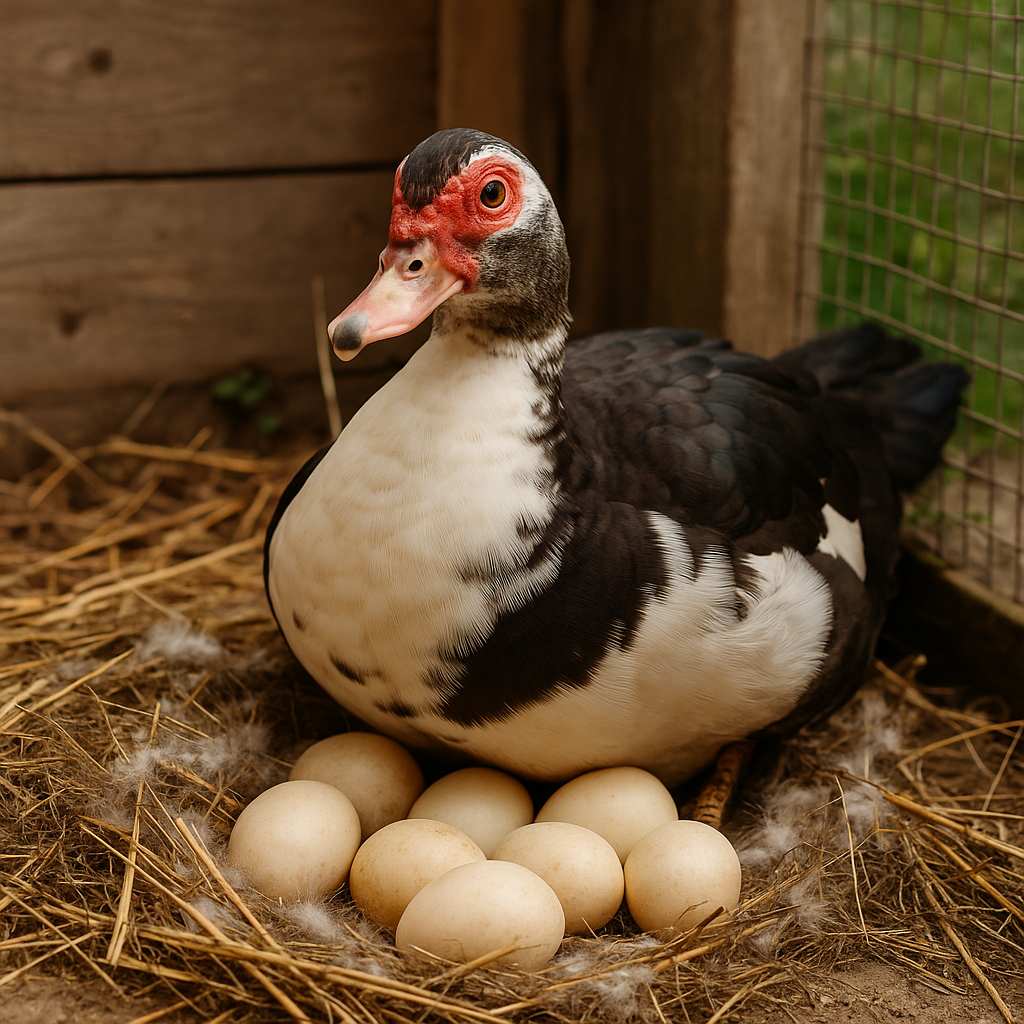
Muscovy Duck Egg-Laying: What to Expect and How to Make the Most of It
The Muscovy duck—aka the “Barbary” (and no, it doesn’t wear perfume despite the name)—is a backyard companion that’s as intriguing as it is appealing. People love it for its flavorful meat, calm temperament… and yes, its eggs.
So, how many does it lay? When should you expect to find eggs in the nest? And most importantly—what are they like in the kitchen? If you’ve ever asked yourself these questions while eyeing your hens curiously, this guide is for you. We’ll talk about laying rhythms, the best seasons, and of course, the quality of the eggs—with no fuss, just useful info (and a few smiles).
Understanding the Muscovy Duck’s Laying Cycle
Age of Sexual Maturity
For female Muscovies, maturity arrives around 6 to 7 months. Don’t expect eggs before then—she needs time to grow, build muscle, and settle in. The drake, true to his laid-back reputation, usually takes a little longer to get going.
In short: patience! A duck that’s too young won’t give you viable eggs, and pushing her too early risks wearing her out.
Cycle Length and Breaks
Forget marathon laying like chickens. Muscovies work in series: 10 to 20 eggs in a row, followed by a well-earned break to brood and raise ducklings. Picture it: she plays mom for over a month (35 days of incubation), then nanny for the ducklings. No wonder she needs a rest before starting again!
Variations Between Strains
Some domestic strains are more productive than others, but overall, Muscovies stay true to their nature: they value quality and maternal instinct over sheer quantity. They’re not “egg factories”—they’re serious, methodical layers.
Frequency and Laying Season
How Many Eggs Per Cycle?
On average, a Muscovy hen lays 80 to 120 eggs per year. Yes, that’s fewer than a laying chicken, which can exceed 250. But remember: Muscovy eggs are bigger, richer, and often sturdier. And honestly—who would say no to a dessert made with Muscovy eggs?
The Most Productive Times of Year
Their calendar is simple: spring and summer = peak production. With warmth, light, and long days, hens feel energized (so to speak). In some regions, laying may begin as early as January and last until October.
Winter, however, is a pause. Don’t worry—it’s not a problem, just nature hitting the “pause” button. And let’s face it—who feels like laying eggs when it’s freezing outside?
Factors Affecting Consistency
Several key elements play a role:
- Climate: too cold = pause, too hot = slowdown.
- Diet: without protein and calcium, you won’t get strong eggs.
- Stress: a fox lurking or a barking dog nearby, and laying can stop.
- Age: just like us, productivity declines over the years.
In short: comfort, good feed, and peace of mind… and your hens will thank you with eggs.
Egg Quality and Use
Size, Shell, and Nutrition
A Muscovy egg is the “XXL” version of a chicken egg. Larger, with a thicker shell and a generous yolk. Nutritionally, it packs more protein, more fat, and more vitamins.
The flavor is slightly stronger, making them perfect for baking. Custards, brioche, fresh pasta—recipes come out richer in texture and deeper in taste.
How to Improve Egg Quality
Three golden rules for top-notch eggs:
- Balanced diet: varied grains, greens, insects, and proteins.
- Calcium: for strong shells—crushed oyster shells are excellent.
- Clean, comfortable shelter: because a stressed or poorly housed hen won’t lay well.
Culinary Uses and Precautions
Muscovy eggs are fantastic in the kitchen, but with one caveat: like all duck eggs, they carry a higher risk of salmonella. Translation: always cook them thoroughly.
For baking, they’re unbeatable. In omelets, they’re a treat. But raw? Best avoided—sorry to fans of “old-fashioned” raw chocolate mousse.
Conclusion
The Muscovy’s laying cycle is steady but generous: 10–20 eggs per clutch, 80–120 per year, with nutritional quality well above average.
Key takeaways:
- Muscovy hens aren’t high-output layers like chickens, but they make up for it with the size and richness of their eggs.
- Season matters: spring and summer are your best allies.
- A good environment and balanced diet are the secrets to consistent laying and strong eggs.
So next time you see your hens settling into their nests, get ready: a fresh batch of rich, flavorful eggs is on the way. And trust me—they’re well worth it, especially in a homemade cake!