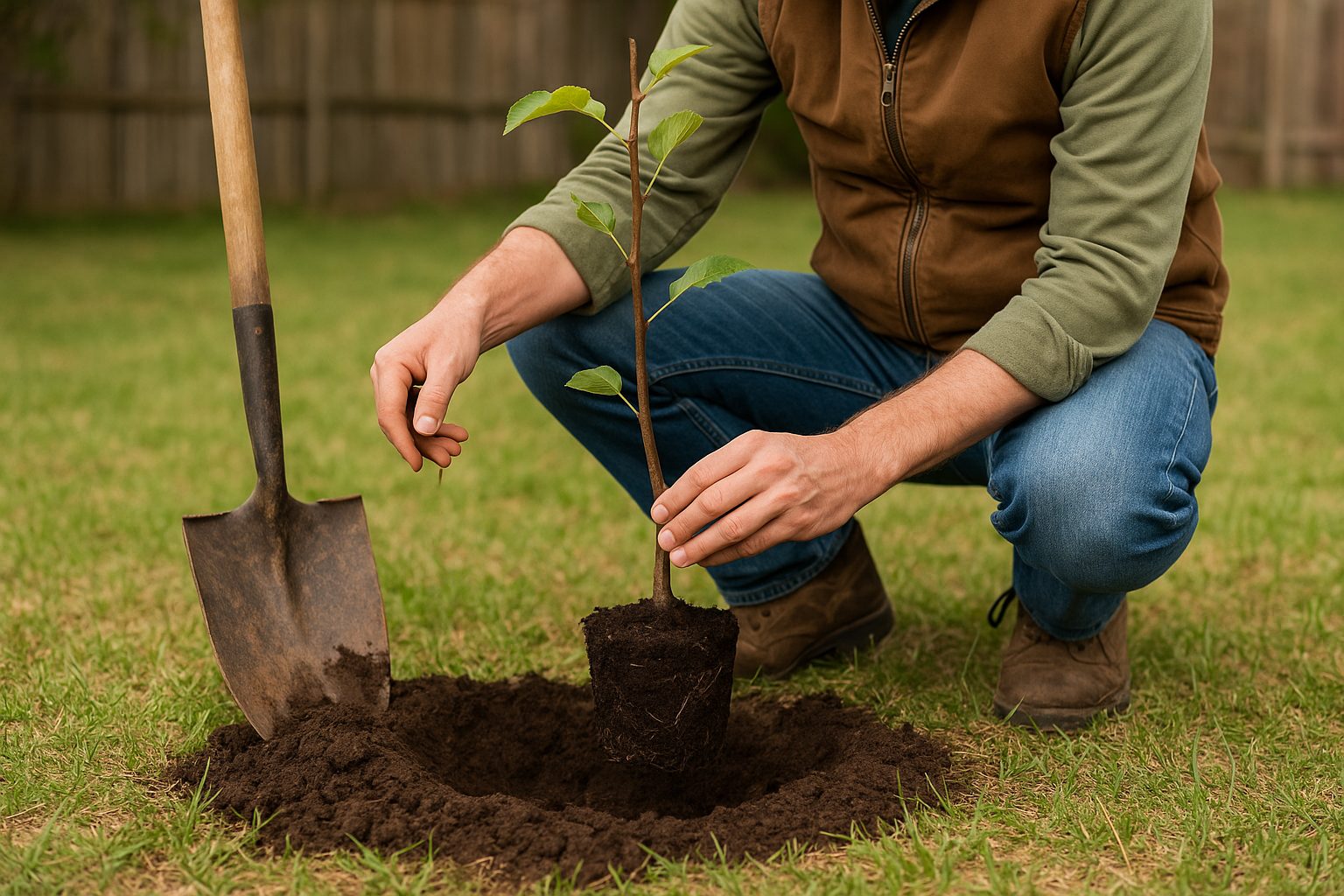
Successfully Planting a Fruit Tree: Tips and Best Practices
Planting a fruit tree is a bit like adopting a pet: you need to pick the right companion, prepare a cozy home, and take care of its well-being. Except here, instead of cuddles and kibble, we’re talking water, sunshine… and patience.
And honestly, is there anything more satisfying than biting into an apple, pear, or peach picked straight from your tree? But planting isn’t something to improvise. Follow this guide for the key steps to help your tree take root in style—and, more importantly, to enjoy the fruits of your labor.
Understanding What a Fruit Tree Needs
The Climate/Variety Match: Avoid a Bad Marriage
Before rushing out to buy a cherry tree just because “it looks pretty in spring,” make sure it suits your climate. Every tree has its moods:
- Apples and pears love deep, cool soils.
- Peaches and apricots prefer light, slightly chalky ground.
- Figs? They’re easygoing—they’ll grow even in rocky soil.
Moral of the story: choose your tree like you’d choose a housemate—low-maintenance, compatible with the home, and ideally bringing something good to the table.
Sun Exposure: Light Is Life
Your fruit tree isn’t a vampire. It craves sunshine—at least half a day of it. Plant it facing south or west, sheltered from strong winds. Because yes, a young apple tree shaken like a palm tree won’t end well.
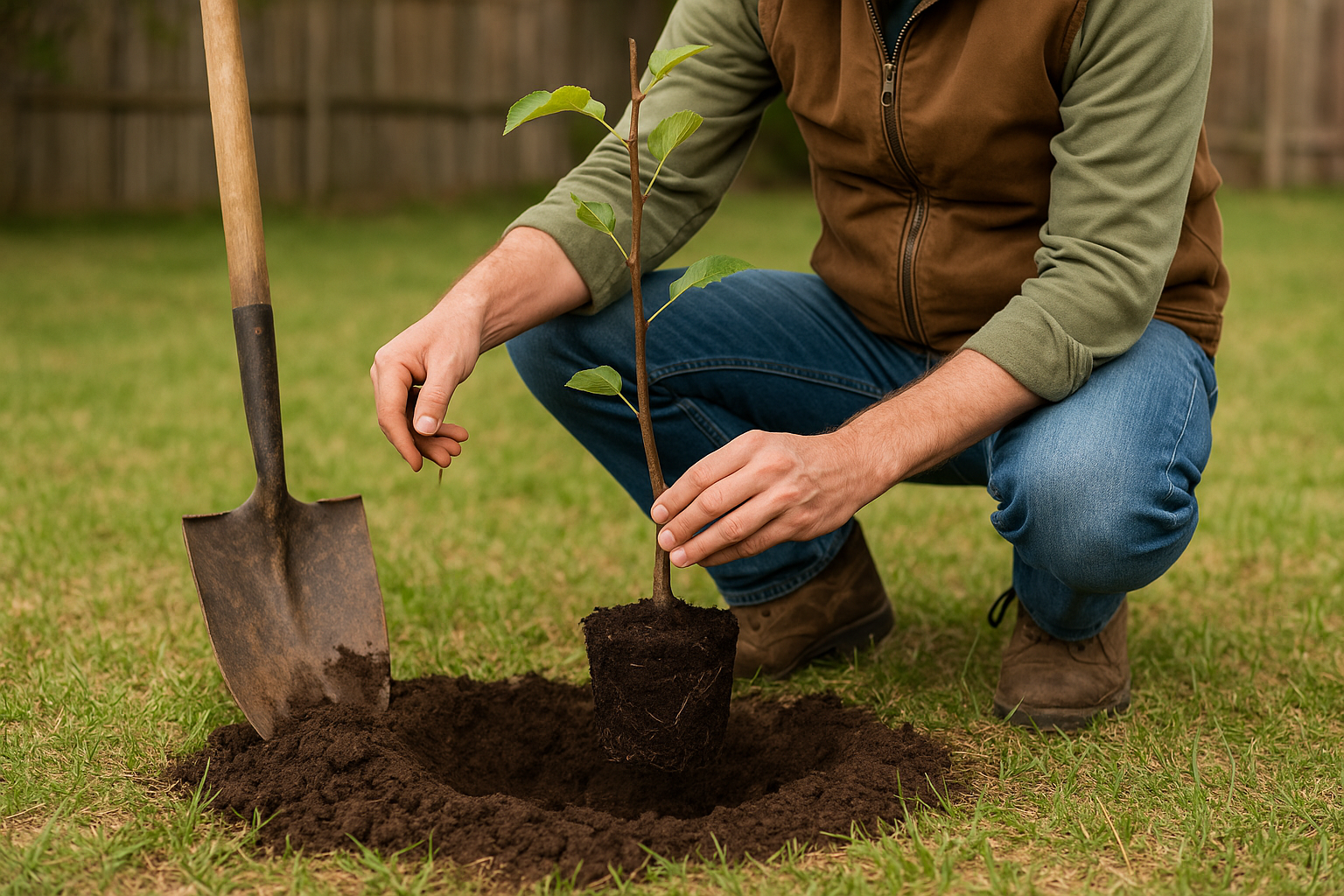
Practical Steps for Planting a Fruit Tree
When to Plant
Autumn is prime time. The soil is still warm, the rains arrive, and the tree can settle in before summer. Missed the window? No worries—winter (when frost-free) or early spring works too.
Little tip: dig the hole a few weeks in advance. Think of it like marinating—giving the soil time to breathe makes all the difference.
The Planting Hole: Dig Smart
This isn’t a quick spade job. Go big: three times the size of the root ball, both deep and wide. Think of it like choosing an apartment with room to grow.
And if your soil is heavy and soggy, add drainage at the bottom—gravel, lava rock, or broken tiles. Anything to keep water moving and avoid turning the hole into a public pool.
Root Prep: A Mini Spa Treatment
If roots are damaged, trim them back. Then treat them to a quick spa: pralinage. That’s a nutrient-rich mud made from soil, compost, and water, where you dip the roots. It gives them a head start.
Planting: Like a Construction Manager
Position the tree with the graft point a few centimeters above the soil. Backfill gently with soil mixed with compost. Firm it down lightly with your hands (not your boots—you’re not putting out a cigarette).
Then water generously—about 10 liters—to help the soil settle around the roots. And don’t forget the stake: the loyal friend that keeps your tree upright through the first storm.
Helping It Establish and Grow
Watering and Mulching: The Winning Combo
A freshly planted tree is like a college freshman: always thirsty. Water regularly in the first months.
Then add mulch (wood chips, straw, dead leaves). It retains moisture, keeps weeds at bay, and protects against cold. Bonus: it gives the base of your tree a nice cozy look.
Pruning: A Spring Haircut
Not for you—for the tree. Formative pruning, done in winter (when frost-free), helps build a solid, airy framework. The goal? Let light in everywhere so fruit develops well.
Think of it like styling a teenager: if you let it grow wild, it becomes unmanageable.
Protection and Care
Young trees attract rodents, deer, and other snack-happy intruders. Use guards or mesh to protect them.
For feeding, stick to organic fertilizers (compost, well-rotted manure). No need to blast it with chemicals: your tree’s a marathon runner, not a bodybuilder. It needs steady care, not a doping program.
Conclusion
Planting a fruit tree is part common sense, part tender care. With the right spot, a well-prepared hole, pampered roots, and regular follow-up (watering, mulching, pruning), your tree will settle happily.
And in a few years, when you bite into a juicy peach or a crisp apple straight from your garden, you’ll know that a little sweat with the shovel was more than worth it.