Common Fruit Tree Diseases: Scab, Leaf Curl, and Brown Rot — How to Treat Them Naturally
Owning an orchard is a bit like ruling a small kingdom. You picture yourself harvesting crisp apples, juicy peaches, and melt-in-the-mouth pears—a little slice of paradise at arm’s reach. But every good story has its villains. Here, they don’t wear black cloaks—they show up as sneaky fungi: scab, leaf curl, and brown rot.
These diseases are the bane of gardeners everywhere, from novices to seasoned pros. The good news? You don’t need to bring out the chemical warfare. Gentle, natural solutions exist—and they work. Since your orchard deserves the same care you’d give a sick child, let’s look at how to spot, prevent, and treat these unwelcome guests… all while keeping your smile.
Spotting the Main Fruit Tree Diseases
Scab: Apples and Pears’ Worst Enemy
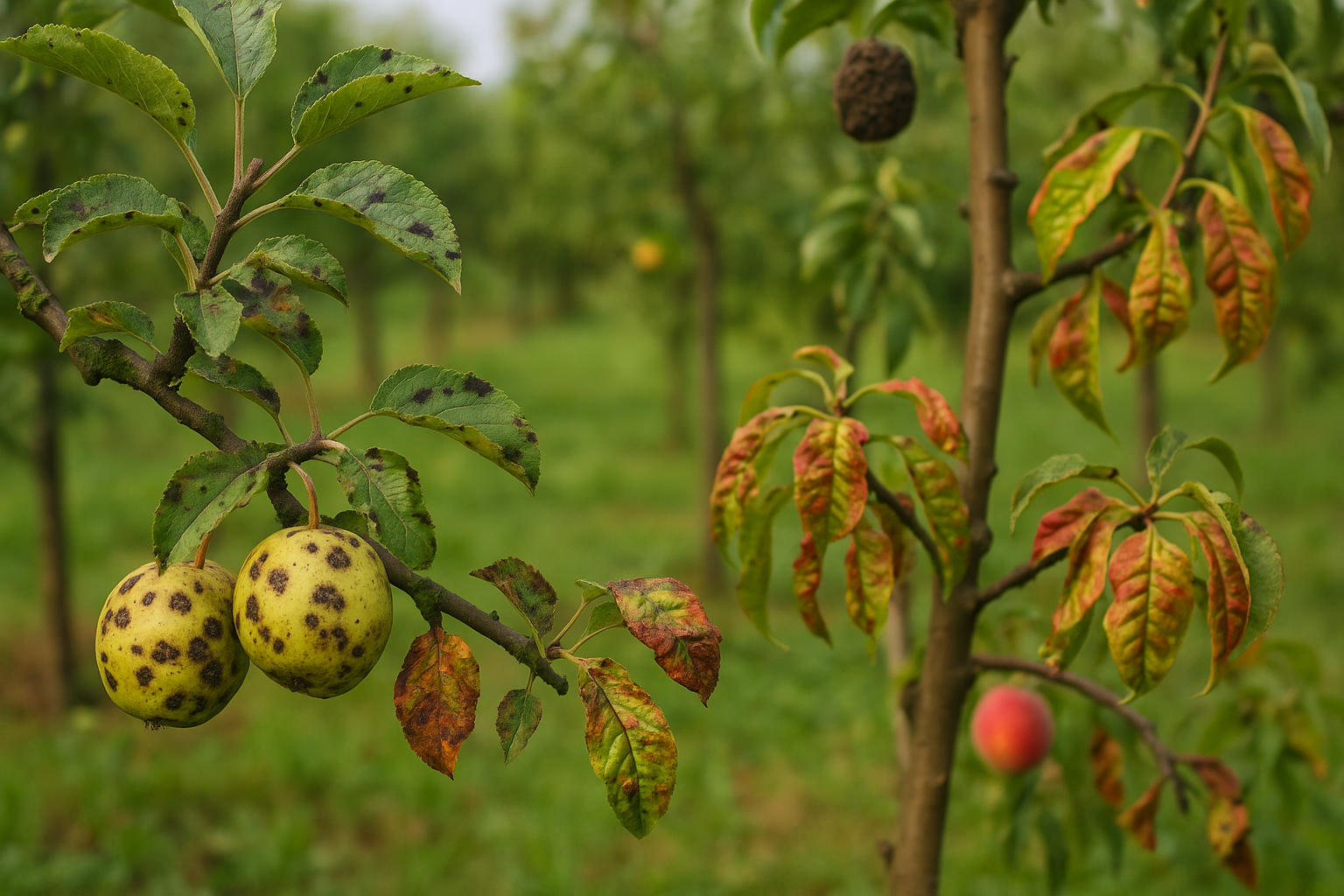
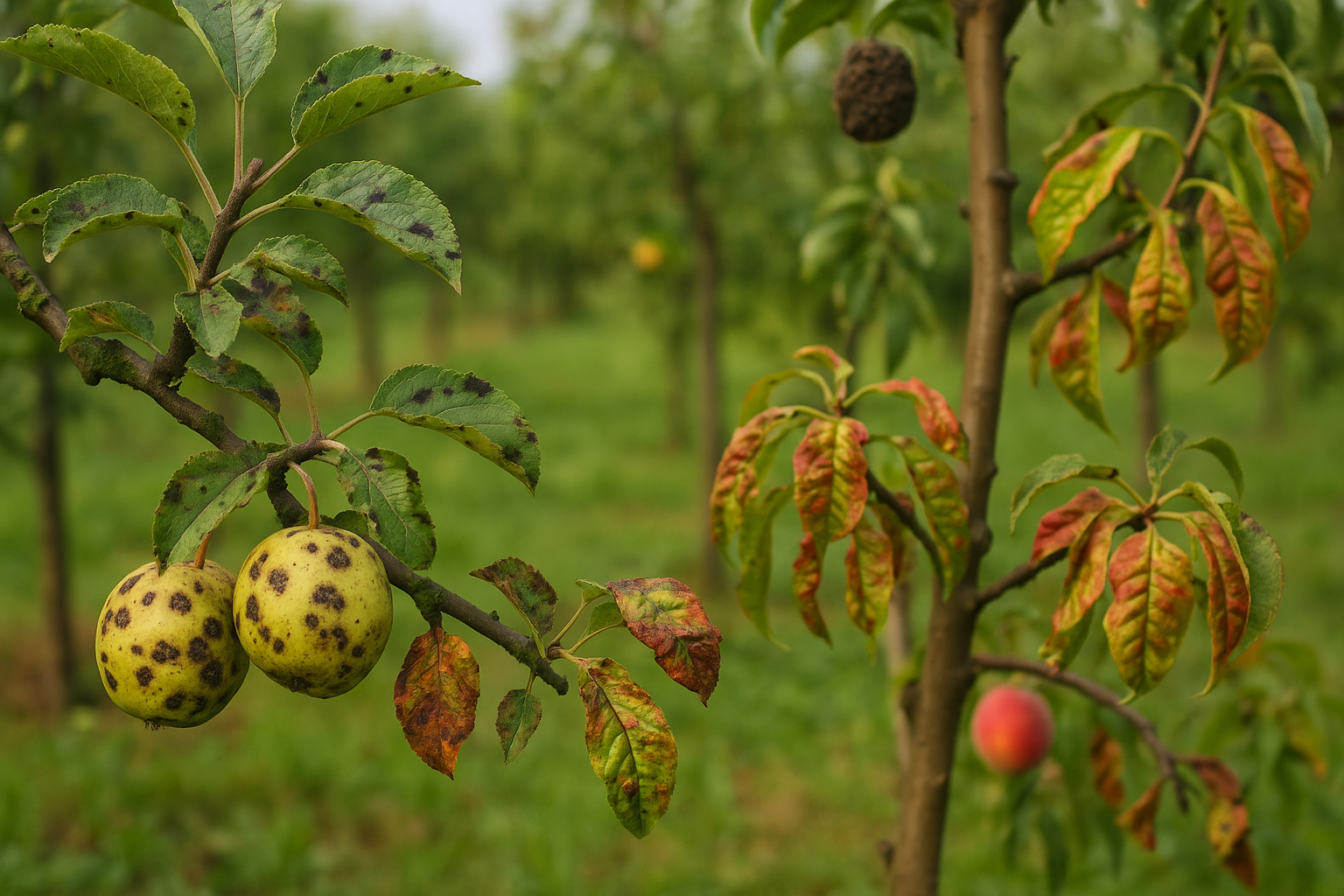
Imagine your apples covered with irregular black blotches… No, it’s not some avant-garde crossbreed—it’s scab. This fungus loves settling on leaves before migrating to the fruit, leaving unsightly marks that make them less appetizing (though rest assured, they’re still edible).
The catch? Scab cleverly spends the winter in fallen leaves, ready to launch a fresh attack each spring. In other words, if you don’t clear the ground, you’re basically offering it a five-star winter resort.
Peach Leaf Curl: A Real Nuisance
Peach leaf curl is easy to recognize. Leaves become crumpled, thick, and red, as if they spent the night in damp air without a hair dryer. It’s unsightly, yes—but worse, it drains the tree’s energy and reduces the harvest.
Think of a peach tree hit by leaf curl as a runner attempting a marathon with a twisted ankle—it won’t get very far.
Brown Rot: The Fruit-Mummifying Disease
Brown rot is the specialist in rotting fruit, targeting cherries, plums, apricots, and peaches. Infected fruits develop large brown patches, sprout concentric rings of white mold, and then… hang stubbornly on the tree, shriveled and dried. These “mummified” fruits remain as sources of infection, spreading the disease. Not exactly the orchard décor you dream of.
Preventing Disease with Good Practices
Choosing Resistant Varieties
Just like people, some trees are naturally tougher than others. There are apple and pear varieties bred for resistance to scab. Picking a robust variety from the start is like adopting a dog that’s already trained—you’ve got a head start.
The Art of Pruning and Airflow
A well-pruned fruit tree is a healthy fruit tree. Why? Because better airflow helps leaves dry faster after rain, leaving less moisture for fungi to thrive. And fungi love dampness.
So pruning isn’t just about aesthetics—it’s a real health strategy. (Though let’s be honest, a nicely shaped tree does look better, too.)
Soil: The Unsung Hero
A fruit tree isn’t just branches and leaves—everything begins underground. Mulching keeps soil moist, compost feeds and strengthens the tree, and mixed plantings discourage disease-prone monocultures.
Think of it like building up your immune system with a good diet: the better you care for the soil, the stronger your trees will be.
Treating with Effective Natural Remedies
Plant Teas and Extracts: Herbal Tonics for Trees
Your fruit trees deserve their own potions. Plant teas and extracts (from nettle, horsetail, comfrey) provide nutrients, stimulate natural defenses, and make life harder for fungi.
Sprayed regularly, they form a protective shield. Think of it as a detox smoothie—for your apple trees.
Baking Soda, Clay, and Other Allies
- Baking soda: mixed with water and black soap, it alters leaf pH, making it harder for fungi to thrive. Cheap, easy, and effective.
- Clay: applied as a trunk wash, it protects and helps heal. Picture it as a giant natural bandage.
- Sulfur and Bordeaux mixture: traditional treatments still permitted in organic growing, but use sparingly. Copper, in particular, can accumulate in soil over time.
Orchard Hygiene: The Seasonal Cleanup
Gather fallen leaves, remove diseased fruit, and burn infected waste. These simple but vital steps prevent fungi from overwintering and returning in force the next year.
An orchard is like a house: neglect cleaning, and sooner or later, pests move in.
Small Actions That Make a Big Difference
- Add birdhouses: insect-eating birds naturally keep pest populations down.
- Encourage biodiversity: hedges, flowers, and herbs—variety makes it harder for diseases to spread.
- Keep watch: a quick weekly inspection is enough to spot the first signs of leaf curl or suspect fruit. Catching problems early makes all the difference.
Conclusion
Caring for fruit trees isn’t just about the harvest—it’s about building a constant dialogue between you, your trees, and the surrounding ecosystem. By learning to identify diseases like scab, leaf curl, and brown rot, adopting preventive practices, and keeping a few natural remedies on hand, you’ll transform your orchard into a living, resilient, and healthy space.
Yes, you may still see the occasional curled leaf or shriveled fruit. But with a little observation, patience, and care, your trees will thrive—and the satisfaction of biting into your own homegrown fruit will always outshine anything from the supermarket.