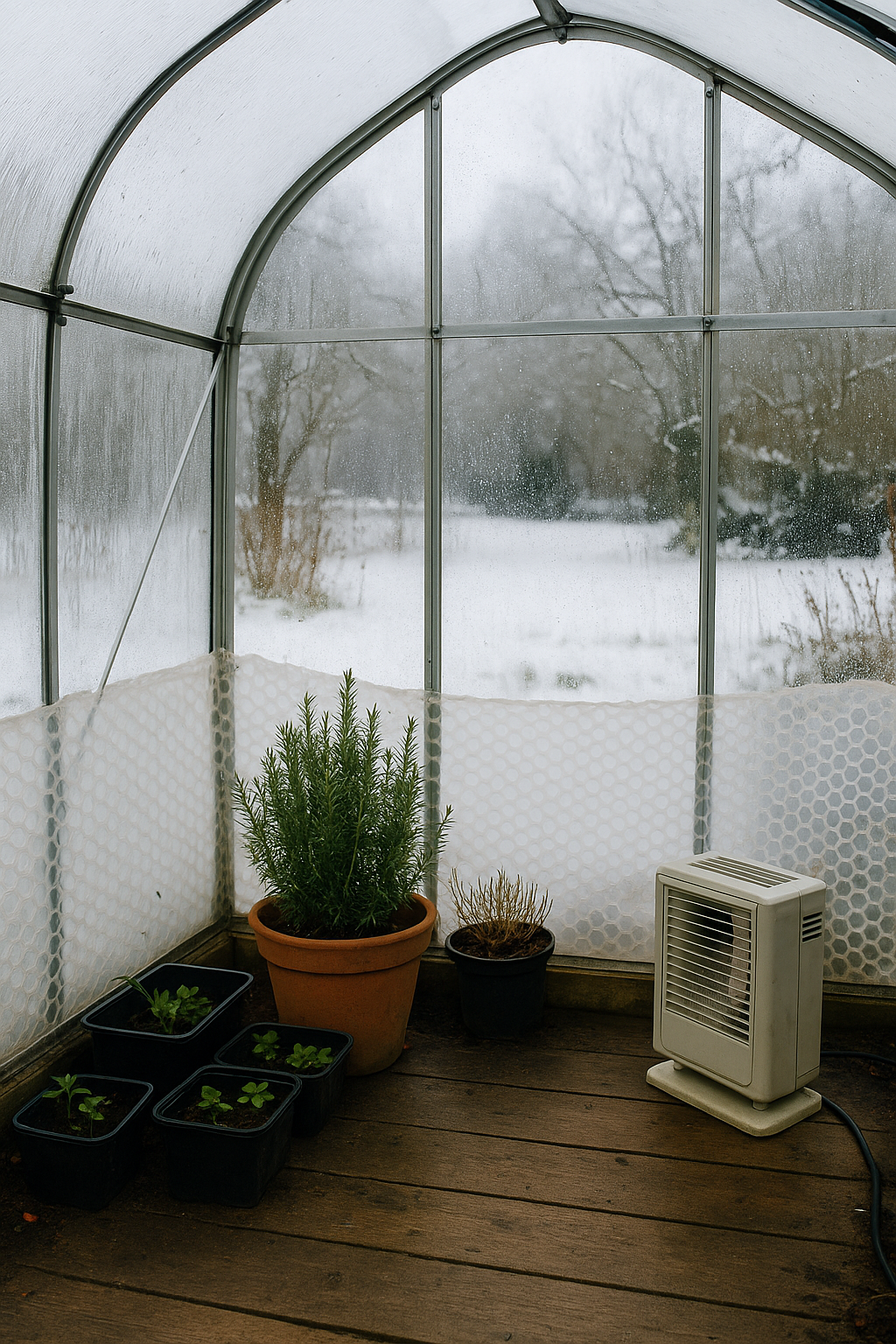
How can you effectively insulate and heat a greenhouse in winter?
When winter rolls in, your greenhouse can turn into a tragic heroine: pretty on the outside, but freezing cold inside. Leaves shiver, tomatoes dream of August, and your seedlings wonder why they weren’t sown in Spain.
The good news? With a few simple insulation tricks and, if needed, the right heating system, you can turn this oversized icebox into a cozy plant cocoon. And no—you don’t need a degree in thermal engineering. A handful of smart hacks are all it takes to keep your crops comfortable. Let’s dive in: we’ll talk bubble wrap, water barrels, and even compost that doubles as a heater (yes, really).
The Gardener’s Winter Challenges
Cold: the enemy of tender leaves
When temperatures drop, it’s not just a matter of “brr, I’ll put on a sweater.” For plants, cold is catastrophic:
- Plant cells freeze and burst (goodbye lush green foliage).
- Chilled soil slows growth and blocks root activity.
- Long nights mean heat loss and stagnant humidity.
Left unprotected, your greenhouse feels more like a freezer than a fertile haven.
Where heat sneaks out
To win the battle against winter, you first need to know your weak spots:
- Thin walls (glass or plastic sheeting) let cold in like a sieve lets water through.
- Poorly sealed joints or loose doors create nasty drafts.
- The ground acts as a cold highway: placing pots directly on soil is like sleeping on bare tile in January.
- Thin plastic greenhouses have zero thermal inertia: they heat quickly, but cool even faster.
Simple, Effective Insulation Techniques
You don’t need to turn your greenhouse into a bunker. A few budget-friendly tweaks can make a big difference.
Double up the walls: cocooning mode
- Bubble wrap – that trusty plastic we all love to pop with our fingers doubles as insulation. Lined inside, it traps heat like a fleece jacket for your greenhouse.
- Horticultural fleece – this lightweight fabric protects plants directly while still letting in light. Perfect for tender seedlings.
- Seal the gaps – a worn-out gasket or a door that won’t close properly can cost you a lot of heat. Quick fixes go a long way.
Insulate the soil: protect the roots
Plants are like people—if their feet are cold, the rest of them suffers.
- Mulch – straw, dead leaves, compost: it retains warmth and moisture.
- Insulating pads under pots or trays – keeps roots from direct contact with cold ground.
- Low barriers around the base of the greenhouse – help block creeping frost.
Harness natural heat
If you love low-tech, clever solutions, these are for you:
- Thermal mass – black-painted water barrels absorb heat by day and release it by night. Bonus: instant water storage.
- Hot compost heap – as it breaks down, compost generates heat. Positioned smartly, it’s free heating and fertilizer in one.
- Mini-greenhouses inside the greenhouse – tunnels or cloches inside add an extra layer of protection.
The trick is layering multiple small hacks—together, they make a big impact.
Choosing the Right Heating (Without Blowing the Budget)
Even with good insulation, sometimes it’s not enough—especially if your winters are more Siberia than Côte d’Azur. That’s when supplemental heating can help.
The classics
- Electric heaters – precise, easy, often with thermostats. But energy bills can skyrocket if you heat a large space. Best for small greenhouses or targeted zones.
- Gas or paraffin heaters – powerful but fuel-hungry; ventilation is a must to avoid CO₂ buildup and dampness.
- Wood or pellet stoves – cozy and eco-friendly (depending on your wood source), but they require more upkeep and supervision.
Smarter alternatives
- Soil heating cables – great for seedlings and young plants, warming roots directly.
- Passive solar heating – store daytime heat in thermal mass (brick walls, water tanks). Free, durable, but requires planning.
- Localized heating zones – no need to warm the entire greenhouse if only a few plants are sensitive. Small, targeted heaters often do the trick.
The golden rule: heat with moderation
The goal isn’t to turn your greenhouse into a tropical sauna. For most delicate crops, maintaining 5–10°C (41–50°F) is enough.
Practical Tips for a Smooth Winter
Because heating without common sense is like wearing a coat without a scarf—helpful, but not enough.
- Ventilate, even in winter – a little airflow prevents mold. You don’t want your greenhouse turning into a steam room.
- Clean the walls – clearer panes = more light = more natural warmth.
- Rotate crops – different plants respond differently to heat; avoid replanting the same veggies in the same spot year after year.
- Use a thermometer – simple, cheap, and it spares you from guessing.
Conclusion
Insulating and heating your greenhouse in winter is like prepping a holiday cottage for your veggies: watertight roof, insulated walls, and a small heater if needed.
With just a few simple tricks—bubble wrap, mulch, water barrels, compost—you’ll save heaps of warmth. And if the cold still bites, the right heater, used wisely, will finish the job.
In short: insulate first, heat second, and always in moderation. Your greenhouse will stay productive, your plants will thrive—and you’ll avoid the kind of energy bill that gives you chills.
So, ready to turn your greenhouse into a winter cocoon for cold-sensitive crops?