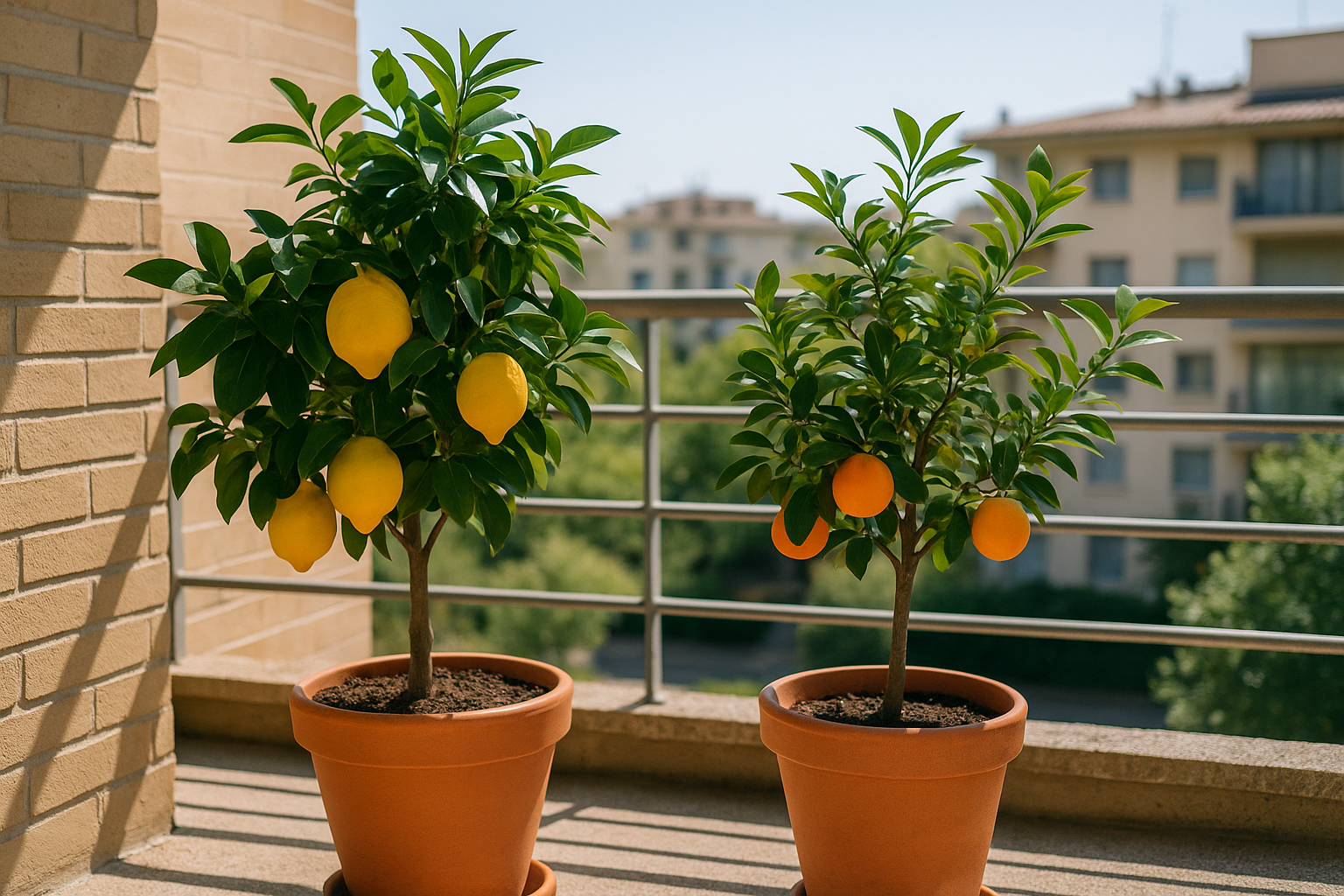
Growing Citrus in Pots: Smart Tips for Success on Balconies and Terraces
Let’s be honest: who hasn’t dreamed of picking a perfectly yellow lemon or a sweet mandarin without ever leaving the balcony? You don’t need a riad in Marrakech or a villa in Nice to enjoy that luxury. Even on a city balcony where laundry dries faster than plants, you can grow citrus. All it takes is a few simple tricks (and the ability to handle a little neighborly envy).
Choosing the Right Citrus for Your Balcony
Compact Varieties for Small Spaces
Let’s be real: putting a three-meter grapefruit tree on a five-square-meter balcony is like trying to park an RV in a Smart car space. Not happening. The secret is choosing varieties that actually fit:
- Lemon tree: the superstar of balconies. Fruits quickly, and its fragrant blossoms make you forget the exhaust fumes from the street below.
- Mandarin tree: sweeter, with easy-to-peel fruits (perfect for kids… or impatient adults).
- Dwarf orange (calamondin): small, compact, adorable, and hardy enough to live indoors through winter.
For a More Original Touch
For those who like to show off a little at aperitif hour:
- Kumquat: pop it whole, peel and all. Guests won’t see it coming.
- Finger lime: those tangy little pearls will make your homemade dishes look like they belong in a Michelin-starred restaurant.
In short, you can play it classic and reliable, or bold and impressive.
Setting Up Citrus in Pots
Choosing the Pot and Soil
Your citrus tree deserves a proper home. Too small, and the roots will feel cramped. Too big, and water lingers—hello, disease.
👉 The sweet spot: a pot 30–40 cm wide, with drainage holes and a layer of clay pebbles at the bottom. Think of it as a memory-foam mattress for roots.
Forget scooping soil straight from the garden (as dense as a stale fruitcake). Go for a special citrus mix: light, rich, and well-drained.
Where to Place Them
Citrus trees are sun-worshippers. Give them at least 6 hours of light per day.
- South-facing balcony = luxury spa.
- North-facing balcony = tougher, but doable with tolerant varieties.
Pro tip: shield them from strong winds. Constant drafts will leave them looking like they’ve had a very bad hair day.
Rookie Mistakes to Avoid
- Watering daily: your citrus is not a goldfish.
- Moving it constantly: citrus hate surprise relocations.
- Leaving water in the saucer: it’s like wearing soggy boots all day—miserable.
Seasonal Care
Watering: Just Enough
In summer, citrus drink like marathon runners. But don’t drown them! The right rhythm: two or three deep waterings per week. In winter, slow it down—they prefer a rest.
👉 Foolproof trick: stick a finger into the soil. Dry down to 2 cm? Time to water. Still moist? Put the watering can away.
Feeding and Repotting
Citrus are big eaters. Skip the nutrients, and you’ll get yellow leaves and sad, tasteless fruit.
- Add a dose of citrus fertilizer every two weeks from spring through late summer.
- Repot every 2–3 years to refresh the soil and keep roots happy.
Pruning and Extra Care
Don’t worry—you don’t need a degree in tree-styling:
- Snip off dead branches or ones crossing each other.
- Lightly prune after harvest to keep a neat, compact shape.
And if scale insects or aphids show up, no need to panic. A homemade spray of diluted black soap usually does the trick.
Conclusion
Growing citrus in pots is like having a demanding but generous roommate. Yes, it needs attention, but in return, it perfumes your summer evenings, brightens your balcony, and serves up fruits bursting with sunshine.
And honestly—who hasn’t dreamed of serving a mojito or lemon tart with fruit from their own tree? A small everyday victory, and a real ray of sunshine within arm’s reach. 🍋🌿