How to Grow Fruit Trees in Pots: Best Varieties and Care Tips
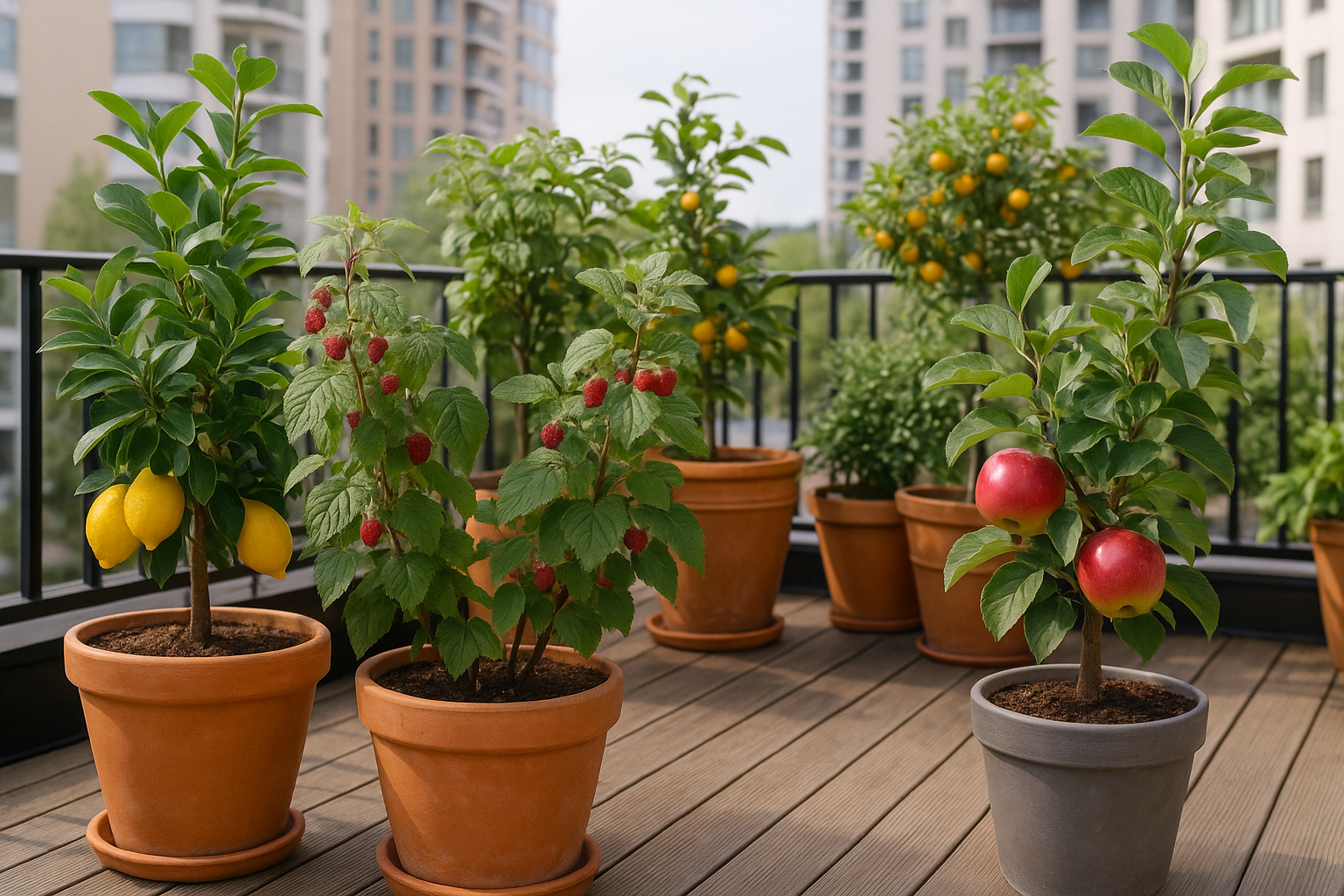
Who said you need a sprawling orchard in the countryside to bite into a crisp apple or squeeze a fresh lemon? Today, even a city balcony can be turned into a little fruit paradise. Growing fruit trees in pots is like inviting nature to join you for coffee on your terrace: it takes a bit of planning, a pinch of patience, but the reward is oh-so sweet.
And let’s be honest, nothing beats the pride of saying: “See that lemon in your cocktail? I grew it myself!”
But container gardening has its own rules—you can’t just stick a full-size cherry tree into a planter. You need to choose the right species, understand their needs, and follow a few key steps. Don’t worry—we’ll walk you through it with both humor and practicality.
Why Grow in Pots?
Perfect for Small Spaces
You might think fruit trees are only for large gardens. Wrong! In pots, they adapt beautifully to balconies, terraces, and small courtyards. Got just 2 m² of terrace space? No problem—a lemon tree or a raspberry bush can thrive there.
Container gardening also lets you play outdoor interior designer. Arrange your fruit trees like living décor, changing with the seasons: fresh greenery, fragrant blossoms, and soon enough, fruit within arm’s reach.
Flexible and Portable
Another big plus? You’re in control. A potted tree can be moved wherever you need it:
- Full sun in summer to boost fruiting,
- Sheltered from wind in autumn,
- Cozy indoors in winter, in a conservatory or bright corner.
And if you move house, you don’t have to say goodbye to your mini-orchard—you can take it with you. Try doing that with a 10-meter apple tree in the ground!
Think of a potted fruit tree as a flexible roommate: always ready to adapt to your mood and your lifestyle.
Best Fruit Varieties for Container Growing
Citrus and Mediterranean Plants
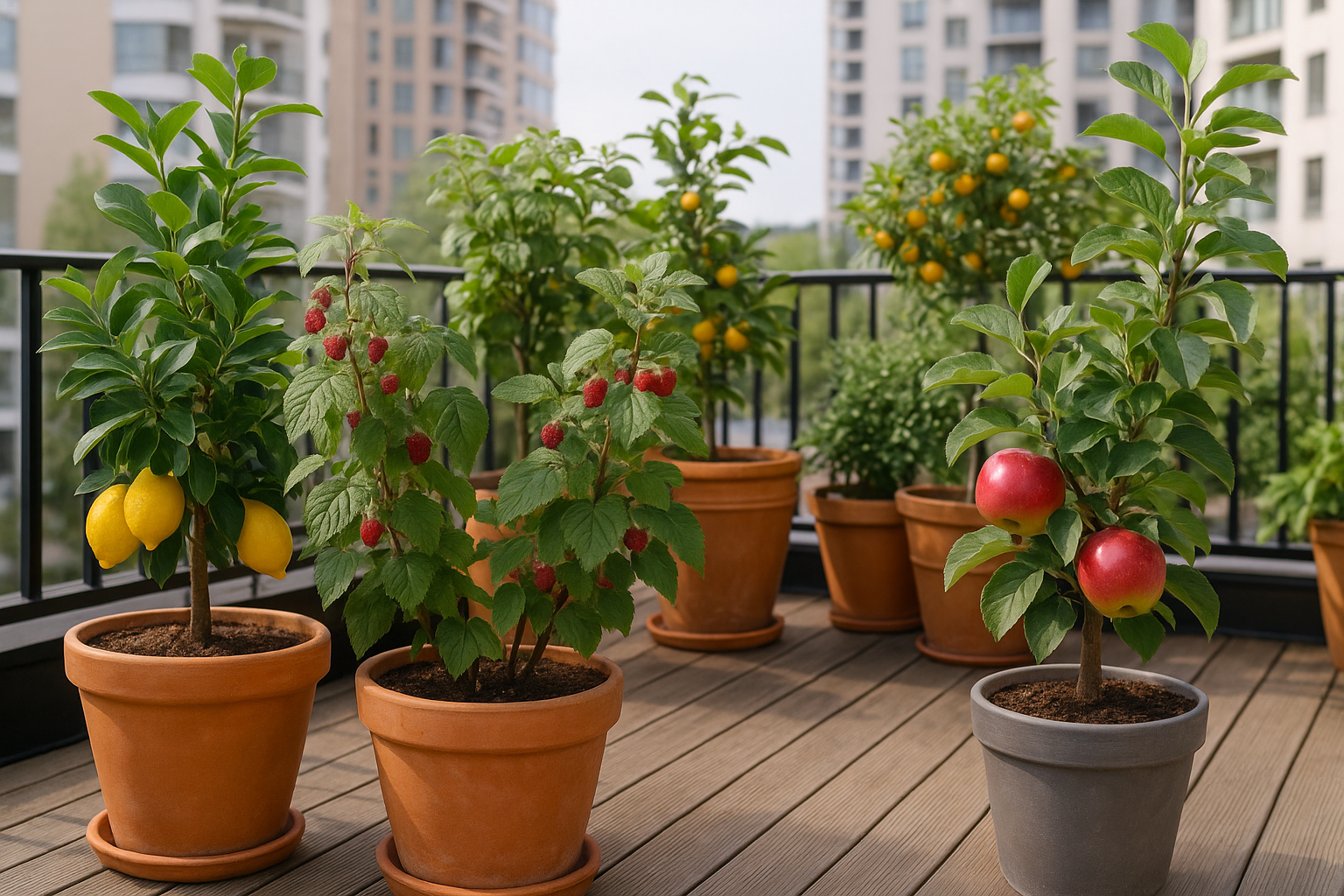
Citrus trees are the stars of container culture. They love warmth and sun, and double as stunning ornamental plants. Lemon, orange, mandarin, kumquat… each with its own personality.
- Lemon tree: hardy and generous, often producing several times a year under the right conditions.
- Kumquat: compact, decorative, and full of tangy little fruits.
- Orange tree: a bit fussier, but nothing compares to the fragrance of its blossoms.
Be warned: these Mediterranean beauties hate the cold. Below 5 °C, they sulk. Give them winter protection—or better yet, bring them indoors.
Dwarf and Columnar Varieties
Thankfully, plant breeders (the magicians of the garden world) have created dwarf and columnar fruit trees—compact yet productive, perfect for pots.
- Mini apple and pear trees: just 1.5 m tall, but capable of great harvests.
- Dwarf peach and apricot trees: spectacular spring blooms and tasty fruit.
- Dwarf cherry trees: ideal for cherry lovers, though slightly more delicate.
Their biggest perk? No ladder required—your harvest is always within reach.
Berries and Compact Shrubs
If you’re just starting out, berries are your best bet. They’re forgiving and quick to reward you.
- Raspberries: perfect for large pots, with generous yields.
- Currants and blackcurrants: compact and resilient.
- Strawberries: thrive in planters or even hanging baskets—perfect for snacking straight off the plant.
Why not mix it up? A large planter with strawberries, herbs, and edible flowers is practical, beautiful, and delicious all at once.
Seasonal Care for Potted Fruit Trees
Growing a fruit tree in a pot is a bit like caring for a green pet: it relies entirely on you. No deep roots to fetch water and nutrients—everything comes from your hands.
Watering and Feeding
Watering is the key battle. Too little, and your tree dries out. Too much, and you risk root rot.
- Summer: almost daily watering, especially during heatwaves.
- Spring & autumn: 2–3 times per week, depending on the weather.
- Winter: reduce drastically, except for citrus, which continue growing slowly.
Supplement with regular feeding, since potting soil depletes quickly. Stick to organic or fruit-tree-specific fertilizers.
Pro tip: mulch the soil surface (with wood chips, straw, or coco fiber) to retain moisture and cut down watering.
Pruning and Repotting
Your dwarf fruit tree shouldn’t turn into a mini jungle. Gentle, regular pruning keeps things in shape:
- Balance the structure,
- Remove dead wood,
- Encourage fruiting.
Repotting is essential every 2–3 years. Roots get cramped, soil gets exhausted—give them a fresh home (bigger pot or fresh soil), and your tree will thrive again.
Protecting in Winter and Summer
Extreme weather is the enemy of potted trees.
- Winter: bring fragile species (citrus, olive) indoors to a conservatory or bright, frost-free room. Others just need frost covers or a sheltered spot.
- Summer: beware of heat stress. Dark pots heat up like ovens. Move to partial shade during heatwaves and water more often.
Smart hack: raise your pots on blocks or pot feet to prevent waterlogging in saucers.
Conclusion
Growing fruit trees in pots is urban gardening at its cleverest. Fragrant citrus, compact apple trees, berry bushes bursting with fruit… there’s a species for every space and every taste.
Yes, it takes some care: watching the watering, feeding regularly, protecting from cold. But the payoff is worth it—homegrown harvests, a prettier terrace, and the joy of being a gardener, even in the city.
Container growing isn’t a limitation—it’s an opportunity. It’s your chance to bring nature closer, even if you live in an apartment.
So, are you ready to turn your balcony into a mini-orchard? And more importantly… to savor your first harvest with a big smile?