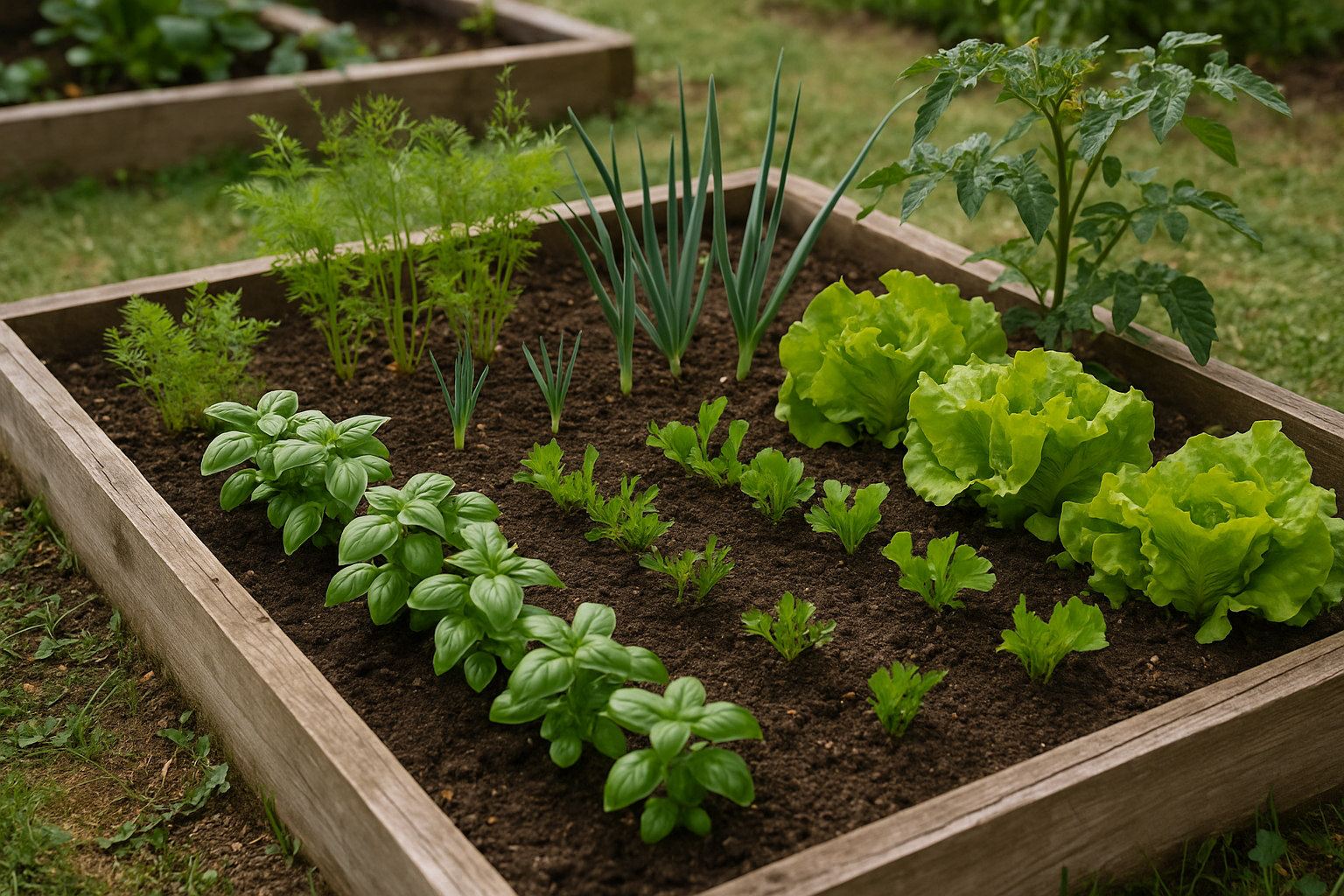
Combining vegetables in the garden: a practical guide to companion planting
Combining vegetables in the garden: a practical guide to companion planting
A vegetable garden is a bit like a shared house. You’ve got the model roommates who happily share the fridge (or in this case, nutrients), the quiet ones who hardly make a sound… and then the difficult ones, who hog all the space and can’t stand anyone else. The trick is making sure everyone gets along.
That’s exactly what companion planting is all about: the art of combining vegetables so they support one another, grow better, and give you bountiful harvests—without squabbles. No need for chemical fertilizers or endless sprays: often, all it takes is the right placement for the magic to happen.
In this guide, we’ll explore why companion planting is such a brilliant idea, the key rules to follow, and—most importantly—real-life examples you can copy right away. Trust me: after this, you’ll never plant your tomatoes the same way again.
Why Companion Planting Is a Smart Idea
Bigger harvests and a healthier garden
Picture this: you tuck your carrots between rows of onions, and suddenly they grow stronger without needing more water. Beans climb up corn stalks as if they were tailor-made trellises, while squash spreads out like a leafy carpet to protect the soil.
That’s the beauty of companion planting: a free helping hand from Mother Nature. Some plants dig deep into the soil while others only skim the surface. Legumes pull nitrogen from the air and fix it into the soil, a gift that other crops gratefully accept. The result? A more balanced, productive garden.
Fewer pests, less stress
What do gardeners dread more than rain during a barbecue? Pests. Those sneaky little creatures that swoop in right when you’re dreaming of a fresh tomato salad. Luckily, smart pairings act like bodyguards.
- Basil planted near tomatoes fends off aphids—the “plant mosquitoes.”
- Onions confuse carrot flies (and honestly, who likes a messed-up sense of smell?).
- Flowers like nasturtiums act as decoys, luring aphids away.
In short, companion planting is like installing a natural alarm system in your veggie patch.
Soil that breathes and regenerates
Grow the same crop in the same spot year after year, and the soil gets tired. Mix things up with different vegetables and smart pairings, and you prevent depletion.
Lettuce, with its shallow roots, doesn’t compete with carrots that dig deep. Rotate crop families from one year to the next and your soil recovers naturally—like sending it to the spa for a full recharge.
The Golden Rules of Companion Planting
Pair up the helpers
Some veggies are inseparable allies:
- Carrots + leeks (or onions): each repels the other’s pests. Like neighbors who watch each other’s backs.
- Tomatoes + basil: not only the ultimate culinary duo, but they also protect one another. Some even swear basil makes tomatoes taste better (coincidence?).
- Corn + beans + squash: the famous Native American “Three Sisters.” A perfect model of teamwork where each plays its role.
Avoid the troublemakers
On the flip side, some veggies are terrible roommates:
- Fennel: the selfish one. It releases substances that stunt nearby plants.
- Potatoes + tomatoes: same family, same diseases (hello, blight). A risky combo.
- Beans + garlic or onions: they just don’t get along, slowing each other’s growth.
Moral of the story: better to prevent conflicts than play mediator all season.
Extra tips for organizing your beds
- Rotate crop families: leafy, root, and fruiting vegetables. Your soil will thank you.
- Add aromatic herbs: thyme, rosemary, chives—they’re pretty, fragrant, and protective.
- Don’t forget flowers: nasturtiums, marigolds, French marigolds… they attract pollinators and distract pests.
Think of your garden as an orchestra: each plant plays its part, but together, they create a beautiful symphony.
Practical Pairings to Try Right Away
The iconic duo: tomatoes and basil — friends for life
It doesn’t get more famous. On the plate, they’re soulmates. In the garden, they’re strategic allies. Basil gives off repellent compounds that keep pests away, while tomatoes provide a little shade to protect basil in summer. A win-win partnership.
The protective pair: carrots and leeks — sharing the workload
The classic “I’ve got your back” combo. Carrots repel leek moths, while leeks confuse carrot flies. Together, they make both harvests safer. Simple, effective, and essential.
The winning trio: squash, beans, and corn — the Three Sisters
An age-old Native American technique. Corn plays the strongman, supporting climbing beans. Beans fix nitrogen in the soil, fueling the others. Squash spreads its broad leaves to keep weeds down and retain moisture. A finely tuned team effort.
Other worthy combos
- Beets + lettuce: they don’t compete and share the same watering needs.
- Cabbage + herbs (thyme, sage, rosemary): aromatic herbs repel cabbage white butterflies.
- Radishes + cucumbers: radishes grow fast and vacate space just as cucumbers take off.
Companion planting isn’t a trendy gimmick—it’s an age-old, effective method. It’s a smart way to boost your harvests, naturally reduce disease, and keep your soil in top shape. And let’s be honest: it’s simply more fun to garden in a patch that’s diverse, colorful, and buzzing with life.
So next time you plant your tomatoes, give them some basil for company. Your plants will be healthier, your harvests more plentiful, and you’ll enjoy the satisfaction of creating a garden where every plant has its place. Proof that, even in the garden, the right partnerships make all the difference.