Pairing Fruit Trees: A Pollination Guide for Abundant Harvests
Owning an orchard—or even just a few fruit trees—is already a joy. But having a productive, generous orchard is even better! And that’s where a quiet but crucial star enters the scene: pollination. Without it, your apple trees might produce three scrawny apples, and your cherry trees may bloom beautifully… but never bear fruit.
The good news is there are simple rules to maximize pollination: choosing the right varieties, planting certain trees together, and encouraging pollinators. In other words, a little strategy and a lot of nature.
In this guide, we’ll explore why pollination is so important, which fruit tree pairings work best, and how to stack the odds in your favor for abundant harvests.
Why Pollination Matters for Fruit Trees
How Fertilization Works
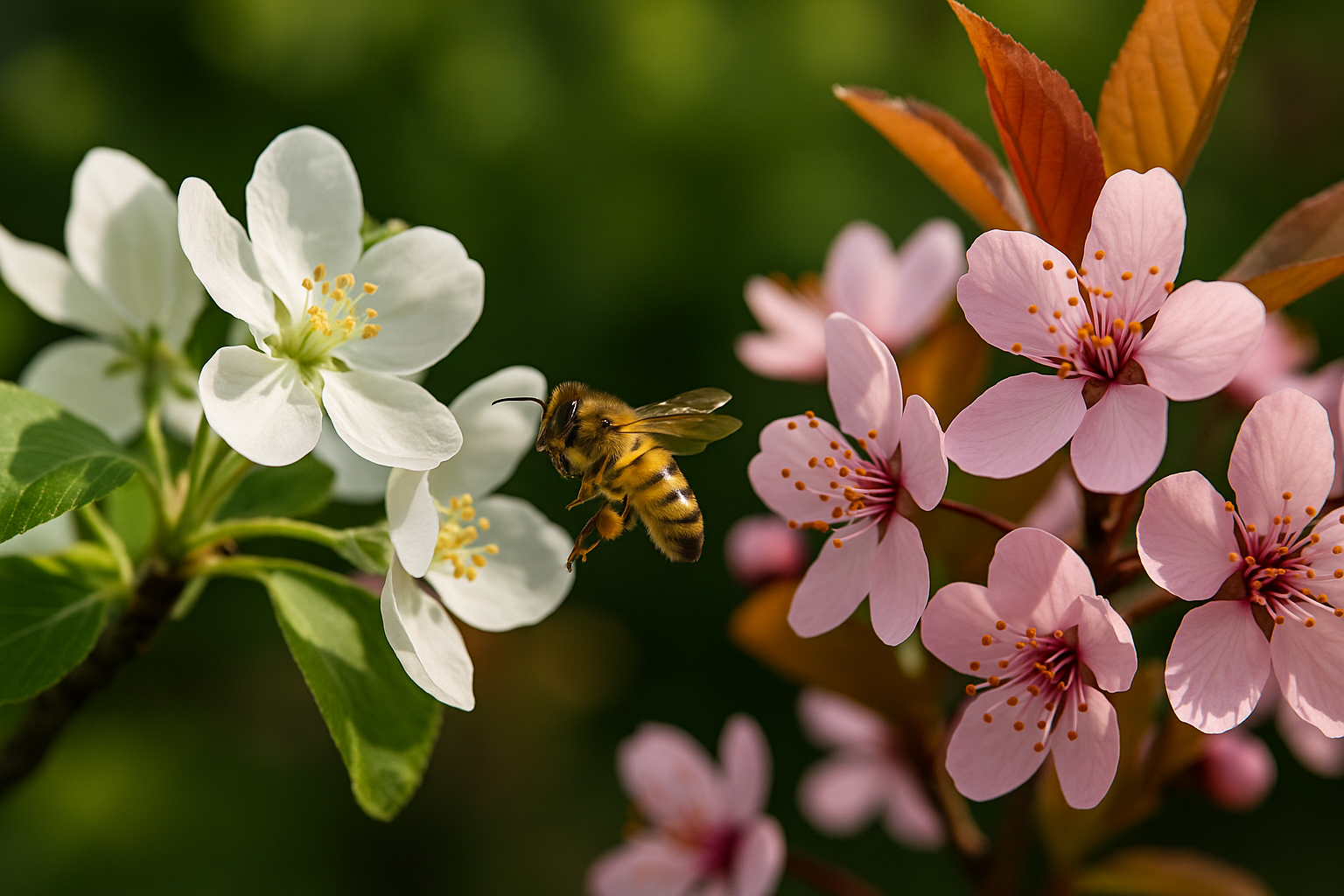
A fruit isn’t just a flower that decided to swell up for your benefit. It’s the outcome of a very specific process: pollen from one flower must reach the pistil of another (or sometimes the same one, depending on the species).
👉 Without this “romantic encounter,” carried by wind, insects (bees, bumblebees, butterflies), or sometimes even a gardener’s hand, no fruit will form.
Each spring, when your fruit trees burst into bloom, it’s a race against time: pollen has to find its way before the blossoms fade.
Self-Fertile vs. Self-Sterile
- Self-fertile: Some species can handle reproduction solo. Pollen from one flower fertilizes another flower on the same tree. Examples: peach, apricot, fig, olive. With just one tree, you can still harvest.
- Self-sterile: Others are more demanding—they need a partner to bear fruit. This is true for most apple, pear, cherry, and plum trees. Without cross-pollination from a compatible variety, you’ll get few—or no—fruits.
👉 Moral of the story: before planting, check whether your fruit tree is self-fertile or not. Many gardening disappointments come from ignoring this small but crucial detail.
Best Fruit Tree Pairings
Apples and Pears: Variety Matters
Apple and pear trees are among the most popular orchard fruits—and also the fussiest.
- Apple trees are mostly self-sterile. You’ll need at least two different varieties that bloom at the same time. Example: ‘Golden Delicious’ cross-pollinates well with ‘Granny Smith’ or ‘Gala’. But beware of triploid varieties like ‘Belle de Boskoop’ or ‘Reinette Clochard’—they can’t pollinate others. In that case, you’ll need three trees (two compatible plus the triploid).
- Pear trees follow the same logic. ‘Williams’ pairs well with ‘Conference’ or ‘Doyenné du Comice’.
👉 Pro tip: choose varieties with overlapping bloom times to maximize fertilization.
Cherries and Plums: Compatibility Counts
Ah, cherry trees… so beloved, yet sometimes frustrating. Many are self-sterile, meaning they absolutely require a compatible neighbor.
- Example: ‘Bigarreau Burlat’ can be pollinated by ‘Napoleon’ or ‘Reverchon’.
- On the flip side, some varieties like ‘Stella’ or ‘Lapins’ are self-fertile—they’ll fruit alone but will yield more with a partner nearby.
Plum trees follow a similar pattern:
- European plums (like the Ente plum for prunes) need other European plums as pollinators.
- Japanese plums (‘Santa Rosa’, ‘Methley’) also require compatible companions.
Other Fruit Trees: Apricot, Peach, Almond
- Apricot: often self-fertile (‘Bergeron’, ‘Luizet’), but more productive with a partner.
- Peach: most are self-fertile. One tree is enough, though disease (like peach leaf curl) can still be an issue.
- Almond: mostly self-sterile, needing another compatible almond tree to set fruit.
👉 Space short? Go for grafted trees with two or three varieties on the same rootstock. One tree, multiple compatible blooms!
Practical Tips for Better Pollination
Planting Layout
Distance matters. For pollinators to do their job, trees should be close—ideally within 30 meters of each other. Beyond that, bees may just head elsewhere.
👉 In a small garden, simply planting two different varieties side by side is often enough.
Encouraging Pollinators
No insects, no pollination. And sadly, bees are under more pressure than ever. How can you help?
- Plant nectar-rich flowers near your trees: lavender, clover, borage, phacelia.
- Leave part of your garden “wild”: dandelions, clovers, and nettles feed pollinators.
- Avoid pesticides: even “a little bit” is harmful to bees.
👉 If you have space, a small hive—even of bumblebees—can turn your orchard into fruit heaven.
Create Balance with Permaculture Principles
Permaculture thrives on biodiversity and beneficial pairings. For pollination, that means:
- Mix species and varieties,
- Add hedgerows (hawthorn, hazel, blackthorn) to attract insects,
- Stagger bloom times so pollinators have food from spring through fall.
👉 The more alive and diverse your garden is, the richer your harvests will be.
Conclusion
Planting fruit trees is good. Pairing them wisely for pollination is even better. Understanding self-fertile vs. self-sterile species, choosing compatible varieties, and encouraging pollinators are the three keys to turning a simple orchard into a true cornucopia.
Remember: fruit trees aren’t loners. They thrive in company. A solitary apple tree sulks, a pear tree planted alone pouts—but add a partner or two, and your orchard comes alive. Sprinkle in some nectar flowers and a pollinator-friendly environment, and you’ve found the magic recipe for delicious harvests.
So—are you ready to play matchmaker for your fruit trees? 🍎🍐🍒