Aquaponics and Climate: Which Plants Should You Grow for Success?
Aquaponics lets you play both gardener and fish farmer—without ever getting your hands dirty in soil. Sounds like a dream, right? But before you rush into planting tropical tomatoes in the middle of your chilly backyard, here’s a reminder: not all plants like the same conditions.
Just like us, some plants love basking in the sun, while others prefer a cooler climate with a sweater on. The takeaway? Choosing plants suited to your climate is the key to avoiding disappointment. Let’s look at which species thrive in warm weather… and which ones are happiest in cooler conditions.
Why Climate Shapes Plant Choices
The Connection Between Water, Temperature, and Growth
In an aquaponics system, everything is linked: fish, bacteria, plants—and the water that connects them. If the water is warm, your tomatoes will be delighted, but your lettuce may sulk. If the water is cool, trout will be in heaven, but peppers will go on strike.
Think of water temperature as the thermostat of the whole system. Too cold, and some plants stall. Too hot, and others bolt to seed faster than a teenager raiding the fridge.
Different Nutritional Needs
Here’s another nuance: not all plants have the same appetite. Tomatoes, for example, are nutrient hogs. Lettuce, on the other hand, is content with a light snack. Matching your crops to your climate helps keep everyone balanced—without starving some or overfeeding others.
Plant Superstars for Warm and Tropical Climates
Fruiting Vegetables (Tomatoes, Cucumbers, Eggplants)
In warm climates, fruiting veggies steal the show:
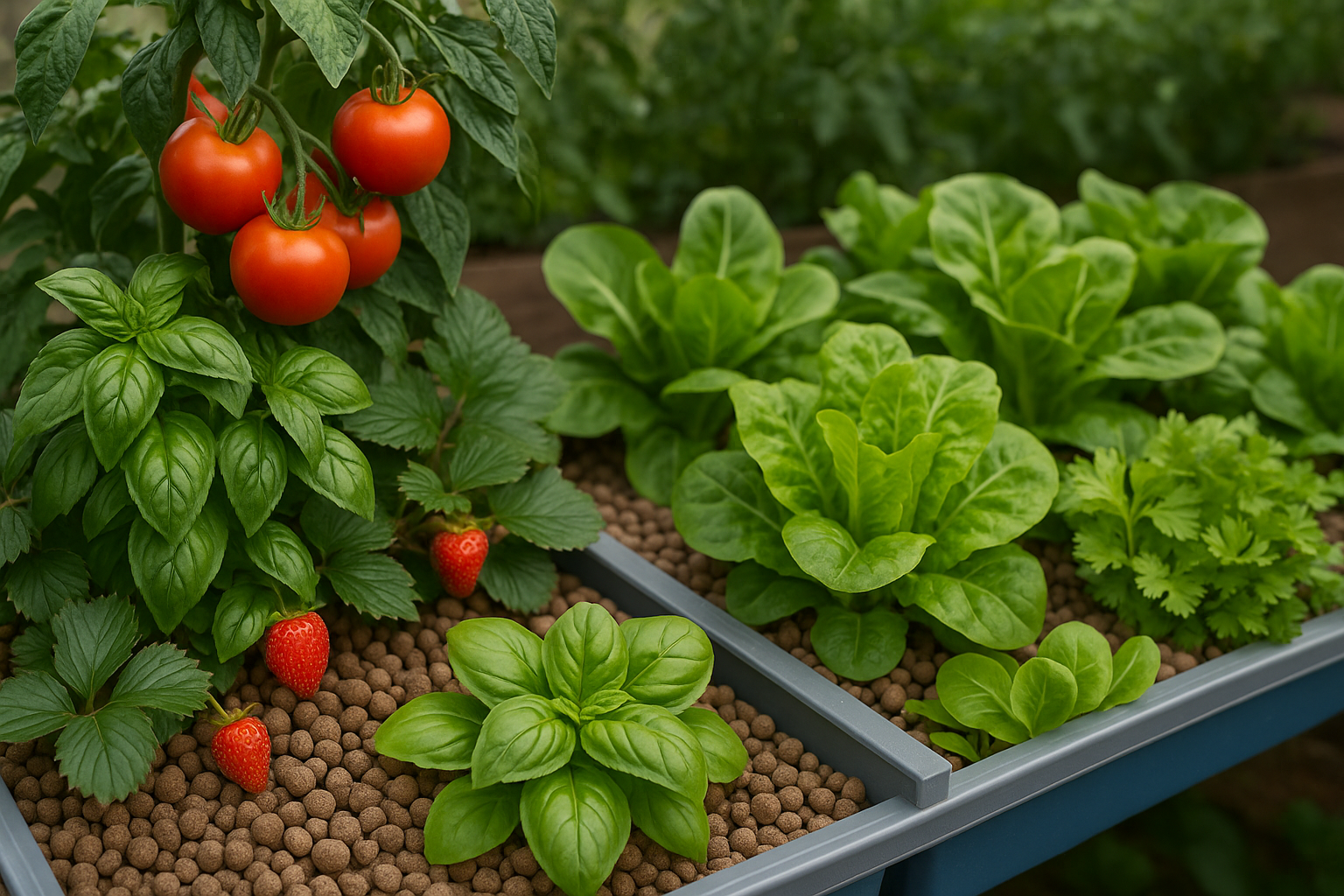
- Tomatoes: the divas of aquaponics. They love sunshine and warm water (20–28 °C). Give them that, and they’ll reward you with endless clusters of red gems.
- Cucumbers: the sprinters. They grow fast, drink a lot, and thrive in heat.
- Eggplants: a bit fussier, but incredibly generous once established.
If ratatouille or summer salads are your thing, this trio is for you.
Summer Herbs
Herbs in aquaponics are like dinner guests who never disappoint.
- Basil: the darling of aquaponics, it grows so fast you’ll swear you can see it move.
- Mint: hardy and invasive—don’t give it too much space, or it’ll take over.
- Oregano and chives: perfect for adding a Mediterranean touch to your cooking.
Sweet Little Fruits
And for those with a sweet tooth:
- Strawberries: they love aquaponics, and your kids (or neighbors) will love them even more.
- Melons: nutrient-hungry and temperamental, but pull it off and you’ll be the star of every summer barbecue.
Best Crops for Temperate and Cool Climates
Fast-Growing Greens (Lettuce, Spinach)
Cooler climates are a paradise for leafy greens:
- Lettuce: quick, crisp, and happy in water between 15–20 °C.
- Spinach: cold-resistant, perfect for pies or green smoothies.
- Arugula: grows so quickly you’ll need to keep up with the harvest.
Perfect for impatient growers who want fast results.
Hardy Herbs (Cilantro, Parsley)
Some herbs prefer cooler conditions:
- Cilantro: temperamental in the heat, but thrives in mild climates.
- Parsley: nearly indestructible, grows year-round.
- Dill: perfect alongside trout… raised in the very same system (a little cruel, but practical).
Root Vegetables That Can Work
Root crops can be tricky in aquaponics—but not impossible:
- Radishes: lightning-fast, great for testing your system.
- Beets: successful if grown in the right medium.
- Young turnips: an interesting option for variety.
Conclusion
Choosing plants for aquaponics isn’t about guesswork—it’s about climate.
- In warm climates, focus on fruiting vegetables, Mediterranean herbs, and sweet treats like strawberries.
- In temperate or cool climates, lean on greens, spinach, hardy herbs, and a few easy root crops.
And don’t forget: aquaponics is also an invitation to experiment. Test, observe, adjust—and have fun! After all, aquaponics is a lot like cooking: there are core ingredients, but the magic comes from your personal touch.