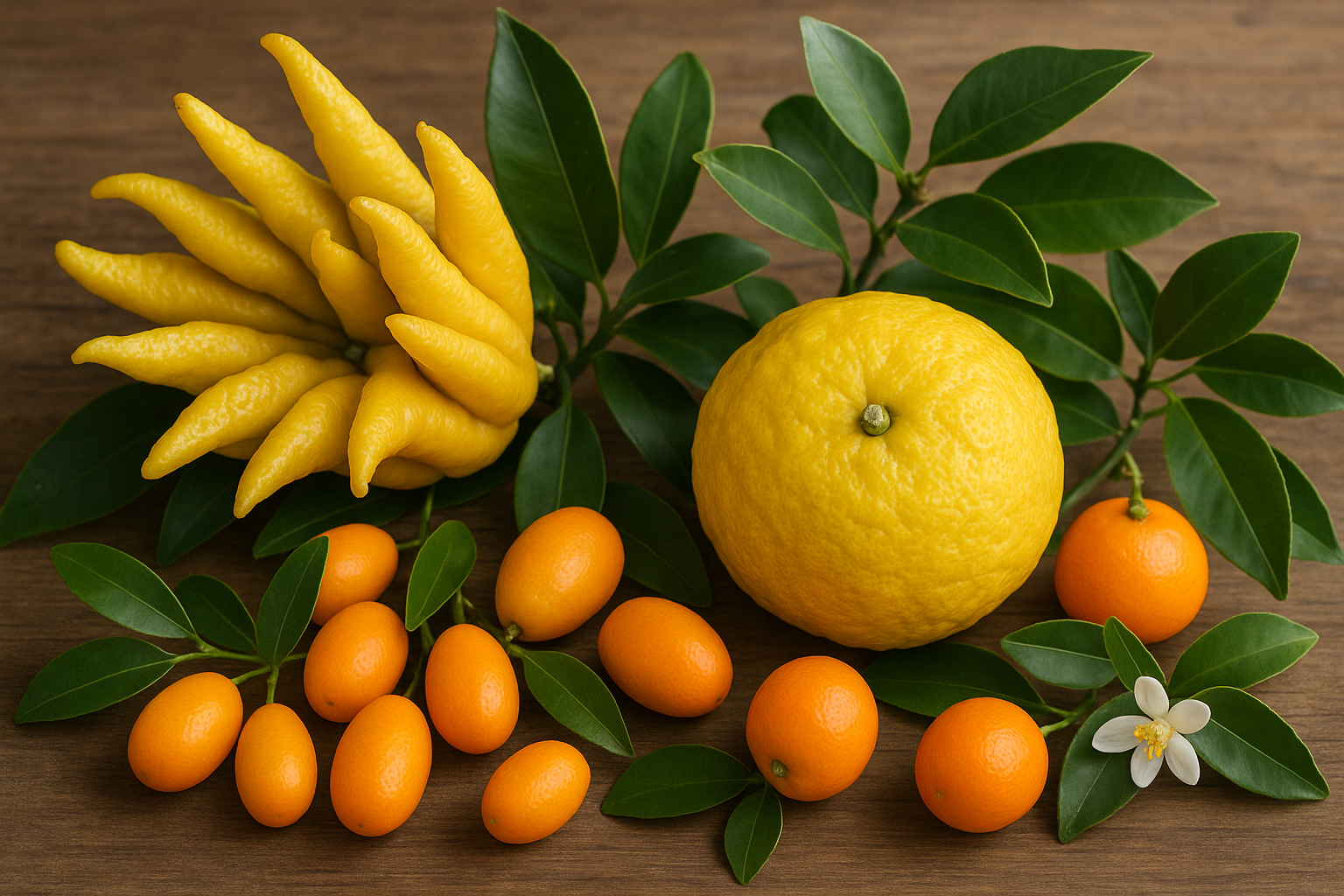
Kumquat, Yuzu, Buddha’s Hand… Exotic Citrus Fruits That Shake Up Our Habits
When we think of citrus, most of us picture a glass of orange juice at breakfast, a squeeze of lemon on grilled fish, or a grapefruit in a post-holiday diet. But behind these supermarket stars hides a whole cast of lesser-known, sometimes downright surprising citrus fruits. Some are tiny enough to pop in your mouth whole, others look like a yellow hand sculpted by a surrealist artist. Either way, they’re impossible to ignore.
So, if you’ve got a curious streak and a palate eager for new sensations, let’s take a vitamin-packed trip around the world to meet the kumquat, the yuzu, the Buddha’s Hand, and the calamondin. Trust us—you’ll never look at your lemon tree the same way again.
When Citrus Go Mini or Giant
Kumquat: the Bite-Sized Citrus
The kumquat is the “baby” of the citrus family. Native to China, these little fruits measure just a few centimeters long. The twist? You eat them whole, peel and all. No need for a knife or a sour face: the thin skin is sweet and fragrant, while the pulp adds a burst of tartness.
In the kitchen, kumquats shine in jams, paired with game, or sliced into sparkling cocktails. Small but mighty, this citrus quickly makes friends wherever it goes.
Buddha’s Hand: the Citrus That Strikes a Pose
Here we switch scales entirely. The Buddha’s Hand is a fruit that never fails to attract attention. Picture an elongated lemon that decided to practice yoga and stretch out its “fingers.” The result is as striking as its name.
This Asian fruit, more decorative than juicy, is made up almost entirely of aromatic peel. Don’t bother trying to juice it—it won’t work. Instead, it’s used to perfume rooms, flavor liqueurs or sugar, or add a gourmet twist to dishes. In some cultures, it’s even offered in temples. In our homes, it makes for a spectacular centerpiece and an instant conversation starter.
Asia on Your Plate: Yuzu and Calamondin
Yuzu: Zesty and Sophisticated
Yuzu has become a darling of Michelin-starred chefs and trendy mixologists. This bumpy little citrus from Japan and Korea tastes like a cross between lemon, grapefruit, and mandarin. On the palate, it’s a firework: sharp acidity, complex aromas, floral notes.
You’ll find it in sauces, desserts, cocktails, cosmetics, and even scented candles. In short, yuzu isn’t just a fruit—it’s a lifestyle statement.
Calamondin: Decorative and Delicious
Less famous but equally charming, the calamondin (or calamansi) looks like a miniature mandarin tree that thrives in pots. Its bright orange fruits are both ornamental and edible, though their sharp acidity might surprise you at first bite.
In Southeast Asia, calamondin juice is a refreshing drink and a staple in sauces and marinades. Here, it’s prized by indoor gardeners—give it a sunny balcony or a bright conservatory, and it will thrive. A cheerful citrus that adds color and joy, even in winter.
How to Grow These Treasures at Home
Pot Culture, Climate, and Care
Good news: you don’t need a tropical orchard to enjoy these rarities. Most exotic citrus grow beautifully in containers, provided they get plenty of light and well-drained soil. Kumquats and calamondins are especially well-suited for pot culture.
In summer, move them outdoors; in winter, protect them from frost by bringing them into a cool, bright space (5–12 °C / 40–55 °F). Be cautious with watering—their roots hate soggy conditions.
Storing and Using in the Kitchen
Once harvested, these fruits keep for a few days at room temperature, but they’re best enjoyed fresh, when their aromas are at their peak. A few quick ideas:
- Candied kumquats to top a dessert.
- Grated Buddha’s Hand zest in a risotto.
- Calamondin juice in a vinaigrette or cocktail.
- Yuzu as a finishing touch on fish or a chocolate dessert.
With these fruits, every recipe turns into a culinary adventure. And if you serve them to guests, get ready for wide eyes and the inevitable: “What on earth is this fruit?!”
Conclusion
Exploring the world of rare citrus is like traveling without a plane ticket. These fruits whisk us to Asia, surprise us with their shapes, aromas, and flavors, and remind us there’s far more variety than supermarket aisles suggest.
So, why not grow a kumquat on your balcony, try yuzu in the kitchen, or buy a Buddha’s Hand just for its sculptural beauty? Exotic citrus aren’t just curiosities—they’re an invitation to wake up your taste buds and add a touch of adventure to everyday life.