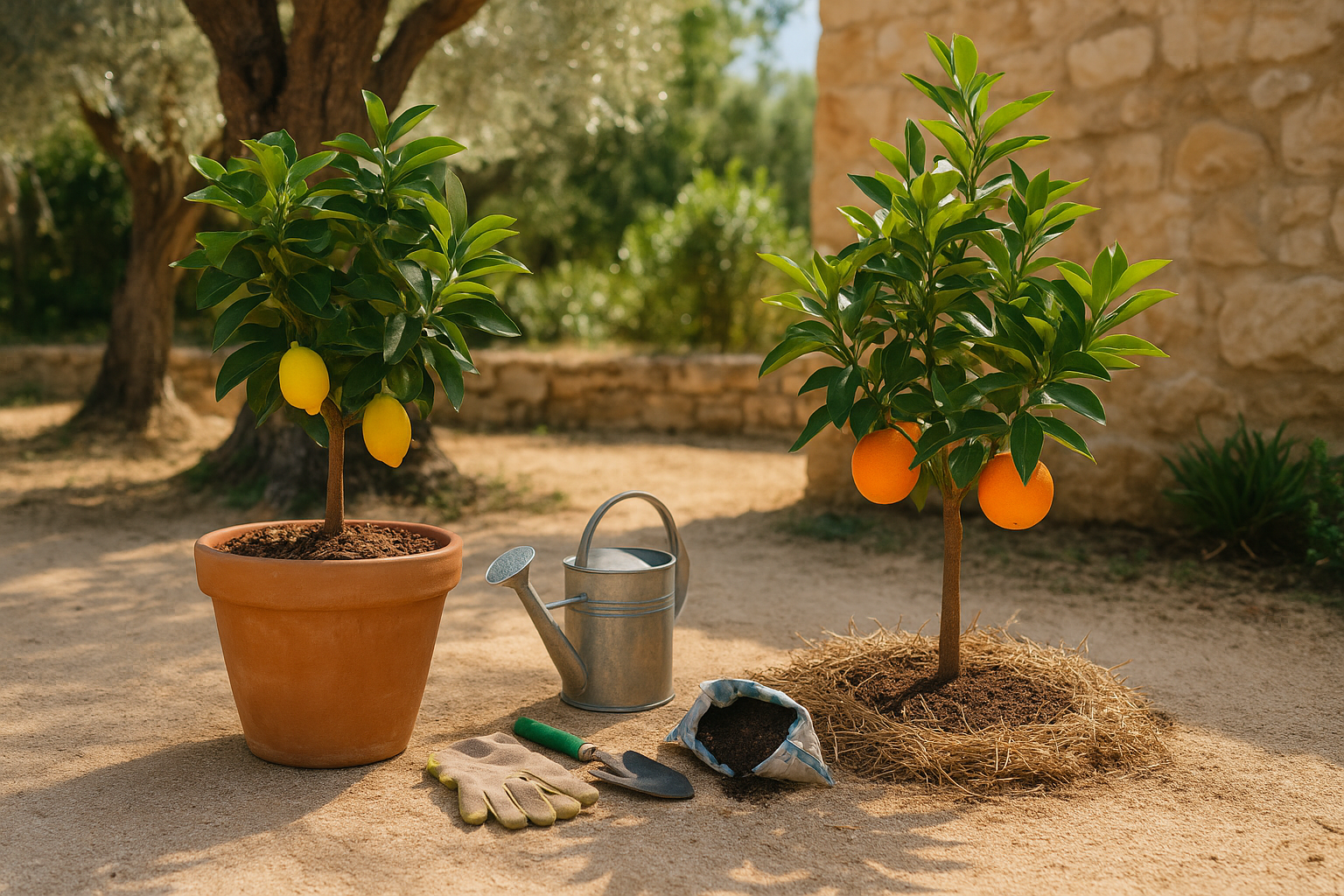
Citrus in the Garden or in Pots: How to Plant and Encourage Growth
Citrus trees carry that irresistible holiday vibe—they make us long for sunshine, even in the middle of November. Lemon, orange, mandarin… their very names conjure images of Mediterranean markets, lazy naps in the shade, and glasses of fresh lemonade. The good news? You don’t have to live in Nice to enjoy them. With the right care, citrus can thrive in a garden or even on a city balcony.
But be warned: citrus trees have strong personalities. They adore sunlight, hate the cold, demand well-drained soil, and sulk at the slightest neglect in watering. In short, they can be real divas. Still, with a little patience and the right care, they’ll reward you with fragrant blossoms and delicious fruit.
So—pot or open ground? Let’s look at how to understand their needs, plant them correctly, and pamper them during those crucial first months.
Understanding Citrus Needs
Temperature and Sunlight
Citrus trees love warmth and light. They need 6 to 8 hours of direct sun per day to stay happy. Forget shady corners or north-facing balconies—they simply won’t thrive.
- In southern France or near the Atlantic coast, you can confidently plant them in the ground.
- Elsewhere, pots are usually the best choice: you can move the tree to shelter it when conditions change.
👉 Golden rule: below -5 °C (23 °F), citrus trees start to suffer. Below -8 °C (17 °F), they’re often done for. In other words, don’t expect a citrus tree to overwinter outdoors in Lille or Clermont-Ferrand without protection.
Soil and Moisture
Citrus are like us: they enjoy rich conditions, but not heavy ones. A clay soil that traps water like a sponge? Big mistake. What they need is:
- well-drained soil enriched with compost or aged manure,
- consistent moisture—but never standing water,
- a slightly acidic to neutral pH (6–7).
For pots, go with a special citrus mix, or DIY your own blend: 50% quality potting soil, 30% coarse sand, 20% compost.
👉 Citrus trees like to “drink often, but not soak.” Leave their roots sitting in water, and you’ll quickly see them decline.
How to Plant Citrus in Pots
Planting citrus in a pot is like renting an apartment to a demanding roommate: it has to be comfortable, well-located, and easy to maintain.
What You’ll Need
- A large pot: at least 40 cm wide and deep for a young plant, more if possible.
- Clay pebbles or gravel for drainage.
- Citrus potting mix, rich yet light.
- Mulch to reduce evaporation (wood chips, straw, coconut fiber).
👉 Tip: always choose a pot with drainage holes. Without them, even the best soil won’t save your roots from drowning.
Planting Steps
- Add a drainage layer at the bottom (clay pebbles, gravel).
- Add a first layer of potting mix.
- Place your citrus tree carefully—make sure the crown (base of the trunk) stays above the soil line to avoid disease.
- Fill with mix, gently firm it down, and water thoroughly.
- Position the pot in full sun, sheltered from cold winds.
Early Care
The first few weeks are critical:
- Water regularly, especially in summer. During a heatwave, a potted citrus may need water daily.
- Feed it: a liquid citrus fertilizer every 3 weeks in spring and summer keeps it thriving.
- Watch the leaves: yellowing often signals iron deficiency (chlorosis), very common in potted citrus. A dose of iron chelates usually fixes it.
👉 Pro tip: repot every 2–3 years. You don’t always need a bigger pot, but refresh at least half the soil. Your tree will thank you.
How to Plant Citrus in the Ground
Planting citrus in the ground is riskier (thanks to winter), but in the right climate, the results are spectacular. Picture a lemon tree, well established, bursting with blossoms in spring and golden fruit in winter—a living postcard.
Best Planting Season
Timing depends on your climate:
- In the south and along the Atlantic coast, plant in spring (April–June) or fall (September–October).
- In colder areas, stick to spring so the tree has time to root before winter.
👉 Avoid winter planting, unless you have a greenhouse or heavy-duty frost protection.
Planting Guidelines
- Dig a hole twice as wide as the root ball.
- Mix the soil with compost and some sand.
- Add a drainage layer at the bottom if the soil is heavy.
- Place the tree upright, crown slightly above soil level.
- Backfill, gently firm down, and water deeply.
- Add mulch to retain moisture and protect roots.
Helping Your Tree Settle In
- Protect from wind: citrus branches are brittle and hate gusts.
- Water consistently during the first year, especially in summer. Several moderate waterings are better than one big soak.
- Watch for frost: even in the south, sudden freezes can damage young trees. Use frost cloths and root protection (straw, leaf mulch) if needed.
👉 Bonus tip: in colder regions, consider hardier varieties like yuzu or poncirus (trifoliate orange), which can better tolerate freezing temperatures.
Conclusion
Growing citrus is a bit like starting a new relationship: it takes attention, patience, and some know-how. But once established, a citrus tree rewards you with unforgettable blossoms and fruits that bring sunshine to your table.
In pots, you get flexibility and the security of winter shelter. In the ground, in milder climates, you give your tree the freedom to flourish and produce abundantly. Either way, the essentials are the same: sunlight, warmth, well-drained soil, and steady watering.
So—are you ready for a lemon tree on your balcony or an orange tree in your garden? Get ready for homemade lemonade, bitter orange marmalade, and mandarins picked straight from the tree 🍋🍊.