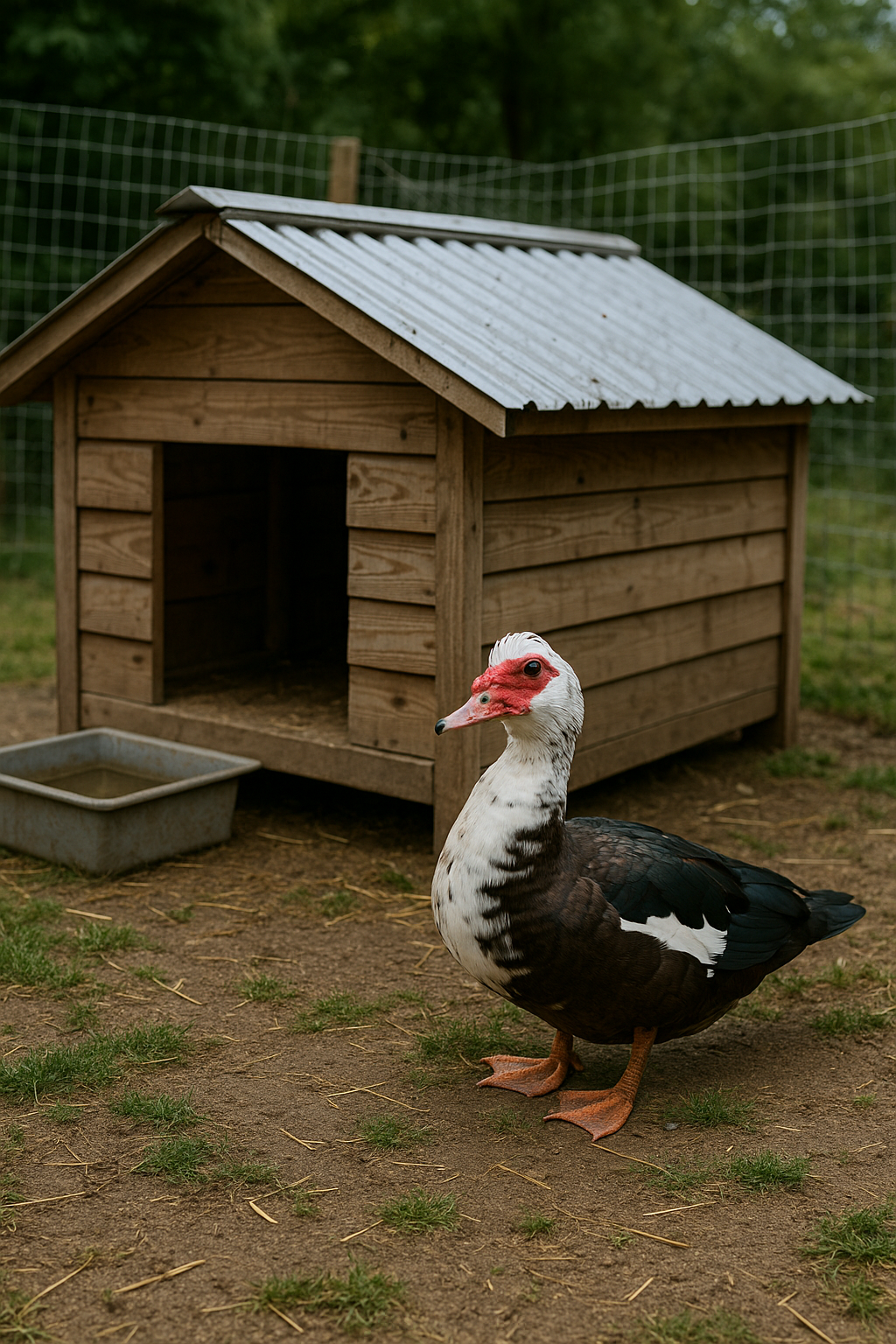
The Perfect Shelter and Enclosure Setup for Your Muscovy Ducks
So, you’ve decided to welcome Muscovy ducks into your garden? Congratulations—you’re about to discover companions that are surprisingly endearing, sometimes a bit grumpy, but always elegant in the way they waddle.
But here’s the thing: these waterfowl won’t settle for just any makeshift hut thrown together in a hurry. Like all refined beings, they have standards… and you’ll quickly learn that a proper shelter and a well-designed enclosure make all the difference between a happy duck and a cranky one.
Understanding Muscovy Ducks’ Needs
Habits and Behavior
The Muscovy duck (or “Barbary,” as it’s sometimes called) is not the type to spend its day cooped up. It loves to forage, scratch, splash about, and sometimes even take off in flight—just to remind you of its wild ancestry. The result? If you don’t give it enough space, boredom sets in. And trust me, a bored duck will always find a way to let you know—say, by exploring your vegetable patch.
Space and Safety
Golden rule: at least 1 m² per duck inside the shelter, and 10 m² per duck in the outdoor enclosure. The more space, the calmer your ducks will be. On the safety side, never underestimate a hungry fox or a weasel: to them, your duck is basically fast food on legs.
Moral of the story: your mission is to build a comfortable fortress—without making it feel like a prison.
Building a Functional Shelter
Recommended Size and Materials
Think of the shelter as a cozy little house. Big enough for you to step inside without bending in half (at least 1.5 m high), and sturdy enough to last.
For materials:
- wood is warm but needs protection from moisture,
- concrete works great for the floor and is easy to clean,
- a sloping roof ensures rainwater flows away instead of onto your ducks.
In short: forget the rickety old shed at the bottom of the garden—we’re talking quality real estate here.
Insulation, Ventilation, and Comfort
Muscovies won’t ask you for central heating, but they’ll appreciate a shelter that blocks the wind and keeps bedding dry. Ventilation is important, but avoid drafts—they’re the duck’s worst enemy.
Practical tip: a slightly raised floor keeps the shelter dry, even during heavy rains.
Hygiene and Maintenance
A neglected shelter quickly turns into a swampy, unforgettable-smelling mess. Use straw bedding and replace it regularly.
Pro tip: a gently sloped concrete floor with a small drainage system makes cleaning a breeze—no more epic mop battles.
Designing a Suitable Enclosure
Outdoor Space and Shade
The enclosure is your ducks’ playground and relaxation area. Allow at least 10 m² per bird, and if you can offer more, your flock will thank you with happy wing flaps.
Don’t forget shade: trees, hedges, or small shelters. Like us in midsummer, ducks would much rather nap in the shade than under blazing sun.
Pond or Water Feature
Now let’s talk about fun. Muscovies don’t need a private lake, but a pond—or even a large tub of water—makes all the difference. It’s where they cool off and keep their plumage in top shape. And let’s be honest: watching them splash around is one of the joys of duck-keeping.
Reminder: change the water often, or your “pond” will quickly become a murky green soup.
Protection Against Predators
A proper enclosure is also a predator-proof one. Stick to these basics:
- strong wire mesh (not the flimsy kind that bends at the sight of a cat),
- a fence buried at least 30 cm deep to block digging predators,
- and if raptors are common in your area, overhead netting can save you some heartbreak.
A little extra work upfront is better than finding one duck fewer in the morning.
Conclusion
Setting up a shelter and enclosure for your Muscovy ducks isn’t just another to-do list item. It’s about giving them a safe, comfortable home where they can thrive—and in return, they’ll bring life and joy to your garden.
In short:
- A shelter that’s well designed, weatherproof, and easy to clean.
- An enclosure that’s spacious, shaded, and secure.
- A water source for hygiene and enjoyment.
With these essentials, your Muscovies will feel like they’re living in paradise. And you’ll get the daily reward of watching their elegant strut and spontaneous splash sessions. In the end, creating their habitat also means creating a little extra happiness for yourself.